


Important decisions affecting the Mashare Agricultural Development Institute in the Kavango East Region are currently being made in Windhoek—a situation that regional leaders say must change.
The institute, which falls under the Product Development, Training and Quality Assurance subdivision in the Ministry of Agriculture, Fisheries, Water and Land Reform, is managed from the ministry’s head office in the capital.
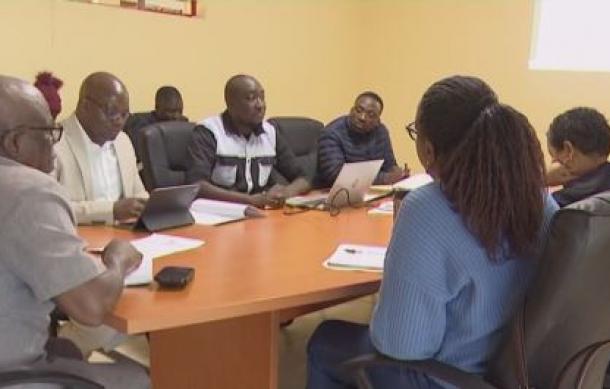
George Haufiku, the institute's manager, recently presented a detailed report outlining the many challenges facing the once-thriving agricultural hub. These include funding shortages, outdated infrastructure, and a lack of autonomy in decision-making.
The Chairperson of the Committee on Agriculture, Environment and Natural Resources at the Kavango East Regional Council, Paulus Mbangu, criticised the current centralised structure, saying it hampers efficiency and responsiveness.
“Reporting to a deputy director for training in Windhoek is just unacceptable,” said Mbangu. “Let us have a deputy director in Kavango East so that these people here can report to the ministry here in Kavango East for effective coordination and also to expedite the process, be it procurement or acquisitions of input; it will be faster. Windhoek should not be the panacea of knowledge.”
Mbangu also lamented the decline of services once offered at the institute.
“Well-trained people were working here, and they had a management team here. They used to have management meetings here for them to plan what they were doing at the centre. They used to train people on farming. They would come here for three to six months to be trained. They used to give bulls to the farmers; now this thing just died a natural death. You will not find them giving bulls for free.”
The institute’s irrigation system was stolen nearly seven years ago, bringing an end to crop production. However, Haufiku says there are plans to revive irrigation once funds are made available.
He also spoke of plans to reconnect the institute to its original purpose of serving the local community.
“We are committed to reintroducing chicken production, eggs, and seven-day-old chicks to sell. We need to produce seeds for the farmers. We need to see how best we can feed back into the community and how best the livelihoods of communities are improved.”