


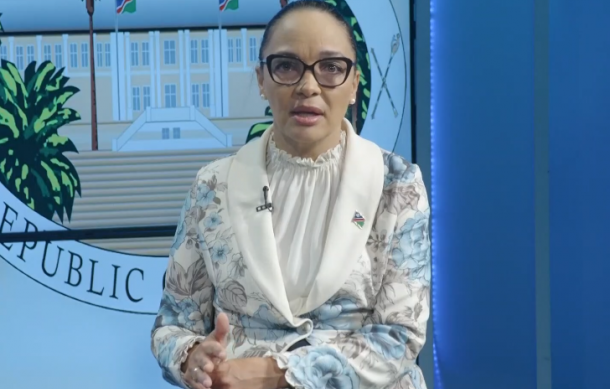
The Executive Director in the Office of the Prime Minister, Gladice Pickering, has said that while the drought relief programme may have come to an end, food security remains a major concern for the current administration.
A vulnerability assessment is still being conducted, she said, to offer a better indication of communities and households still adversely affected and how they can be supported.
The recently concluded nationwide drought relief programme included interventions like food assistance to vulnerable households, livestock support, seed and horticulture provision and water supply projects.
Speaking on NBC's Inside The Chambers programme, Pickering said several regions received inadequate amounts of rainfall and have remained drought-affected to date.
Thus, the Office of the Prime Minister is exploring measures to ensure that these affected communities continue to receive support.
"We want to put into place mechanisms that will ensure food security and reduce the level of vulnerability experienced by individuals within affected communities. We also aim to decrease the prevalence of malnutrition, particularly among children, a matter of great concern to us at present. And we are working very hard with many partners to address the issue of child stunting and malnutrition."
She stressed the importance of Namibia moving beyond reacting to disasters like floods and droughts to proactively preventing them.
"And the preventative mechanisms are quite specialised because you need to have your data collection and availability, on the one hand, in very good shape. You need to have your coordination mechanisms very, very well mapped out. And we need to now bring in technology to digitalise many of our mechanisms, including the registration of eligible households for assistance, our warehouses, and how we monitor our inventory and stock. To prevent fraud, theft, and corruption, we need to incorporate a meteorological aspect: how can we obtain information that will indicate what is expected to happen in the next rainy season?"
Pickering believes that the government succeeded in its mission to not exclude any household.
"I think we have over-accomplished that mission because we found information; verified information on the ground shows us that at least 1.4 million Namibians benefited from the Drought Relief Programme. Upon closer inspection, we found that even individuals who did not strictly meet the eligibility criteria for receiving Drought Relief Food still received it."
Highlighting those solely dependent on the programme, she stressed the importance of Namibia progressing from a dependency culture to becoming more self-sustaining, from waiting on food parcels to growing its own food.