


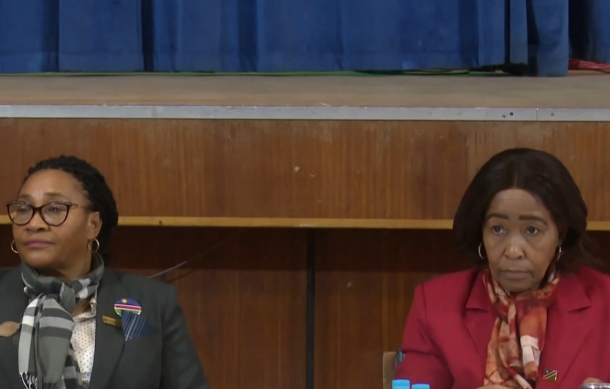
The Minister of Agriculture, Water, Fisheries and Land Reform questioned the industry's N$300 million contribution to government coffers, while the sector's revenue in 2024 was N$14 billion.
This week, Minister Inge Zaamwani is consulting various sub-sectors of the fishing industry at Walvis Bay.
She revealed that the government collected N$278 million in 2024 through various streams, including fishing quota fees and by-catch penalties.
"If you look at the total turnover of the industry in 2024 of N$14 billion and the owner of the resource is getting less than N$300 million, this is a point of reflection for us. We must reflect on it, and we must see how we can increase the value that is added to the resource and the value paid over to the owner of the resource, which is, of course, the government of Namibia on behalf of the people.
Zaamwani said the industry remains a vital pillar of the economy even if its contribution to the GDP declined from 4.5 percent in 2023 to 4,1 percent in 2024.
The minister attributed the decline to continued decreases in the Total Allowable Catch in commercial species.
Last year, the industry landed 429,000 metric tonnes from the 438,000 metric tonnes of the TAC.
"Notwithstanding the reduction in the TAC, the sector maintains robust operations with a fleet of 235 vessels and 30 onshore processing facilities. And those facilities produce a total of 39 value-added fish and fish products, reinforcing the sector's commitment to employment creation, value addition and economic growth.
She stressed that the reduced TAC further affected the export earnings in 2024, which declined from N$14.1 billion a year before to N$13.8 billion.
Zaamwani said over 19,000 Namibians, the majority being female, were employed onshore by the industry.
She emphasised the need to retain those jobs.
Zaamwani is confident that consultations with the industry and technical experts would ensure an improved TAC next year to retain jobs.