


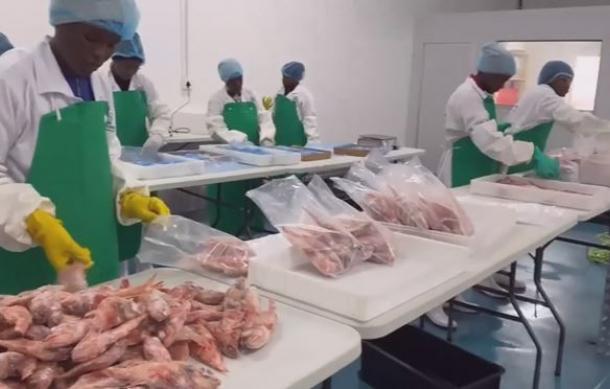
The Confederation of Namibian Fishing Associations (CNFA) fears job losses in the industry because of the newly introduced bycatch limits.
The Chairperson, Matti Amukwa, highlighted the concern at a recent event at Walvis Bay.
Amukwa's concern comes after the government's recent decision to reduce the bycatch limit from 5% to 2%. He said it is not clear if the new limit refers to the total bycatch landed by a vessel or the bycatch of a certain species.
"There is bycatch that is seasonal and cannot be avoided, resulting in a vessel landing more than 2% of the species over a few months and thereafter no more for the rest of the year? Also, various species just live among the targeted species and are impossible to separate until they are caught. There cannot be a one-size-fits-all solution."
Amukwa believes the 2% limit threatens the industry and job security.
"We can already confirm that the intended measures will paralyse vessels, significantly increase costs, and very negatively affect employment. We implore the ministry to consult the individual sectors to determine a bycatch percentage that suits that industry."
Fisheries Minister Inge Zaamwani is on a three-day consultation with industry players at Walvis Bay to address various concerns, including the new bycatch threshold.
She expressed sympathy with the affected parties, adding that, "I understand this is problematic in different subsectors of the industry. We recognise that the law stipulates that everything that goes into the net can't be returned to the sea; you must land it. But we have seen over the last few years a troubling trend wherein, in some cases, the bycatch even exceeds the quota allocated to some of the operators, and this is why we need to collectively find a solution to this problem."
Zaamwani told industry players that a sustainable fisheries sector depends on the effective management of bycatch.
Under the new and strict rules, operators exceeding the 2% limit are forced to surrender their bycatch to the government.
Bycatch fees or penalties have also increased from 15% to 50%. Repeat violators will be named and shamed, and in severe cases, their licence revoked, quotas reduced, and fishing gear and vessels confiscated.