


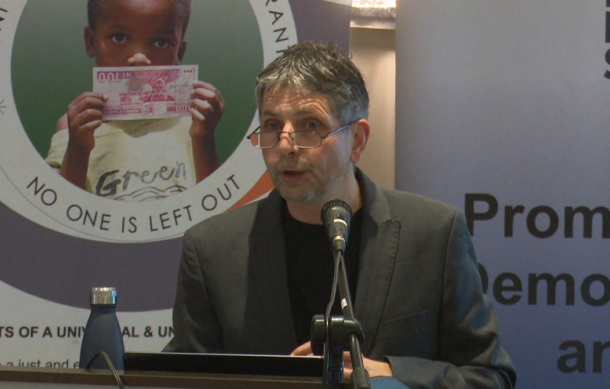
Given that many Namibians continue to face socio-economic challenges, the introduction of a Basic Income Grant (BIG) remains urgent.
Piloted in Otjivero between 2008 and 2009, the Economic and Social Justice Trust published a booklet highlighting the positive social impact of the BIG during the trial period, as well as the after-effects once it ended.
The grant allowed for the circulation of money, which benefited the community in bricklaying, dressmaking, shoe repairs, small business entrepreneurship, tackling hunger, and improving health.
However, it all crumbled down after the end of BIG, increasing poverty in the area.
Social Development Specialist Dr. Dirk Haarman explained that "you need to have security for people being freed out of the daily fight for survival, out of precarious situations, to be able to become economically active, to take economic risks. We know that small businesses just 20% to 30% make it. So you need to be able to fail. And you need to have cash in circulation, not the monopolistic situation that we are currently facing in Namibia. And that's what you are getting with the universal basic income grant."
In 2022, during the tenure of the late President Hage Geingob, the Conditional Basic Income Grant programme was introduced.
The programme targets the poor households with an income of less than N$1,600. The programme started out as a Food Bank.
"We believe that this intervention should not be considered a perpetual handout from the government to poorer households. But we see it as an investment in human capital and economic growth. That means that our agenda, while we do this, is to ensure that we can see economic activity around the N$600. And that we also see the people that receive it as being deserving Namibians," said Ministry of Finance Executive Director, Dr. Michael Humavindu.
Speaking online during the event, Uhuru Dempers, a member of the BIG Coalition of Namibia, emphasised the importance of social grants as a means to combat poverty.
The reality on the ground, he further says, is disheartening, with many Namibians continuing to go to bed hungry.