


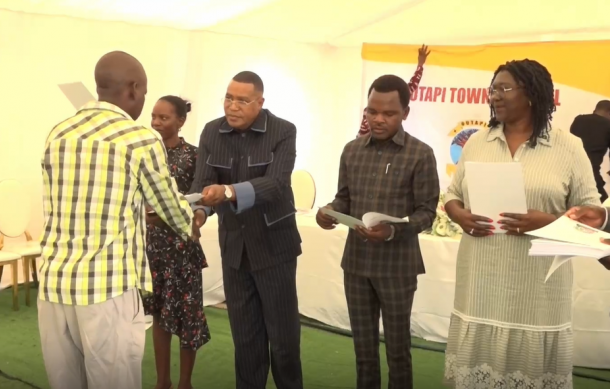
At Outapi in the Omusati Region, officials held a handover ceremony for certificates of landhold titles under the Flexible Land Tenure system, where over 200 project beneficiaries from Outapi received their certificates.
The Flexible Land Tenure system, established under Act 4 of 2012, is an innovative legal framework designed to provide affordable, accessible and secure land rights to residents of informal settlements and low-income urban areas.
The journey started with a pilot project in four towns, namely Oshakati, Gobabis, Windhoek and Outapi, and some results are impressive.
Thus far, 400 people at Oshakati have benefited from the project, and over 1,000 people are beneficiaries in Gobabis, but unfortunately, similar results are yet to be recorded in Windhoek.
"Our commitment to improving housing and land access aligns seamlessly with the President's call for accelerated housing development and land servicing. This initiative was not simply an administrative undertaking. In 2016, the Outapi town council took a bold and visionary step by donating a virgin portion of land to launch the Flexible Land Tenure project," said Outapi CEO, Nashilongo Ananias.
In a speech delivered on his behalf, Urban and Rural Development Minister James Sankwasa said the handover demonstrates the government's commitment to transforming land access and empowering low-income earners in Namibia.
He said the system is likely to mitigate past land injustices, as it introduces new tenure types that are responsive to the expressed needs of inhabitants from informal settlements across local authorities in Namibia.
"The Ministry of Urban and Rural Development is engaged in vigorous strategic preparation of urban land for the purposes of building and creating sustainable, functional, and equitable human environments by ensuring access to infrastructure, utilities, and public facilities in accordance with Namibian urban and rural development planning legislation."
The Minister of Agriculture, Fisheries, Water, and Land Reform, Inge Zaamwaani, delivered the keynote address on her behalf.
She pointed out that "The intention is to make land delivery in urban areas to the people living in informal settlements very affordable and available. The expectation of the ministry was to see local authorities taking advantage of this noble policy initiative to provide tenure security to communities living in informal settlements; we are yet to see this shift in many local authorities."