


Namibia's Director of Maritime Affairs said the country's transition to low-carbon shipping must include women, youth, and local businesses.
Christian Fikunawa represented the Minister of Works and Transport at the first regional workshop on the Global Gateway Green Shipping Corridors, held in Walvis Bay.
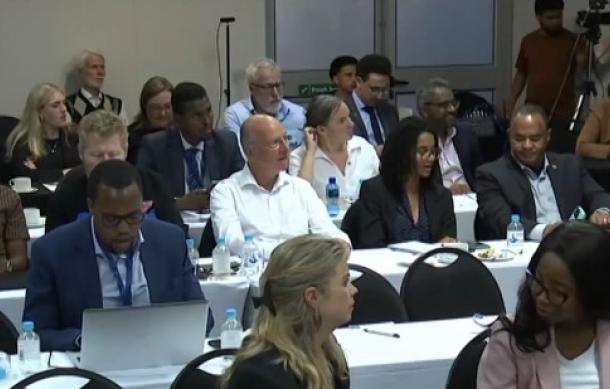
The workshop brought together stakeholders from Africa, Europe, and other regions to exchange knowledge on decarbonisation and to advance regional initiatives aimed at lowering emissions in the maritime sector.
He emphasised that shipping decarbonisation is not a long-term ambition for Namibia but a concrete national commitment.
"Our nation's ports in Walvis Bay and Luderitz are strategically positioned to serve as clean energy and logistics hubs for the region, and we are committed to working with our partners to ensure that these developments generate long-term economic and social benefits for our people. We must ensure that the shift toward a low-carbon maritime future creates real opportunities for our youth, our women, and our local enterprises to participate in new technologies, industries, and supply chains."
European Union Ambassador Beatriz Martins noted that maritime transport contributes 3 percent of global emissions and urged stronger collaboration on low-carbon solutions.
"Of course the challenges are significant; we are faced with conflicting geopolitical interests, the scale of investments required, the high cost of renewable fuels, and the lack of infrastructure for alternative fuels. And that's what we are here to discuss. We are particularly keen to get the perspective from the private sector on what the private sector needs in order to make that step."
She added that adequate financing will be essential, noting that institutions such as the European Investment Bank and the African Development Bank have created opportunities for grant funding.
In 2024, the EU provided €10 million through the Global Maritime Technology Phase 2 project to help reduce emissions in developing regions.