


The Ministry of Health and Social Services (MoHSS) has officially launched the National Parenting and Caregivers Handbook and Facilitator Guide, aimed at strengthening families and promoting positive parenting across Namibia.
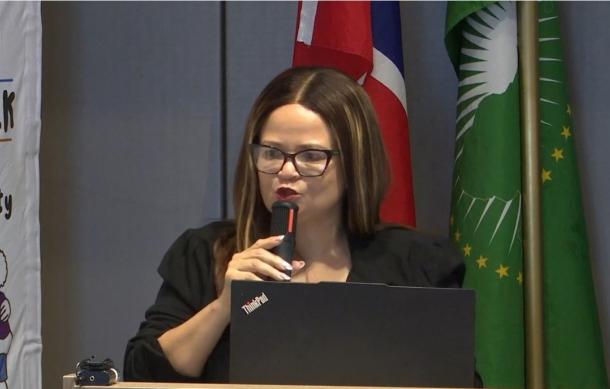
Speaking at the launch in Windhoek, Acting Director of Developmental Social Welfare Services Helen Mouton described the handbook as a collaborative effort developed with various stakeholders.
Mouton said the handbook aligns with Namibia's Vision 2030 and National Development Plan Six (NDP6).
"If our children are physically, emotionally, mentally and spiritually not stable, we will be in trouble. We need to take care of them today to have a stable and prosperous Namibia."
She added that evidence shows positive parenting improves child health, school retention and future productivity and reduces violence, including gender-based violence and substance abuse.
The handbook consists of seven modules covering self-reflection, cultural practices, parent-child relationships, positive discipline, online safety and zero tolerance for violence.
Meanwhile, United Nations Children's Fund (UNICEF) Country Representative Samuel Ocran congratulated the ministry for the initiative, saying parenting plays a central role in national development.
"When we invest in parents and caregivers, we invest in Namibia's human capital. Positive parenting leads to better nutrition, better mental health and better learning outcomes."
Ocran noted that despite progress in education and health services, challenges remain, including low exclusive breastfeeding rates, high levels of multidimensional poverty and limited access to early childhood development programmes.
The European Union's ambassador to Namibia, Ana Beatriz Martins, said the handbook represents an investment in the country's future.
"Investing in parents is investing in children. Positive parenting benefits child development, improves academic performance, mental health and social competence."
Minister of Health and Social Services Esperance Luvindao stressed that parenting goes beyond biology and called for a return to strong family values.
"We envision a Namibia that has zero tolerance for violence against children. A Namibia where every home is a sanctuary of safety, emotional intelligence and love."
Dr Luvindao emphasised the need to translate the handbook into local languages and ensure effective nationwide rollout with measurable targets.
The handbook will now be rolled out through trained facilitators across ministries, NGOs and civil society, with the government reaffirming its commitment to protect children and strengthen families as Namibia works toward Vision 2030.