


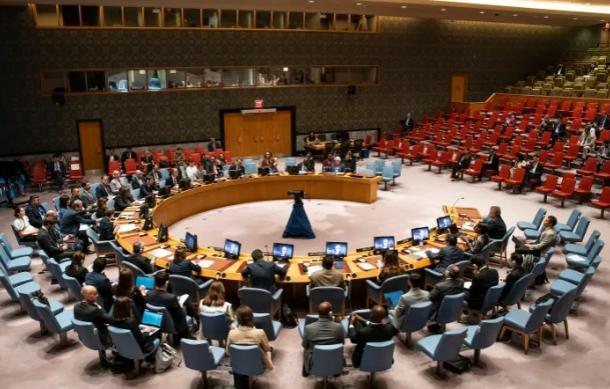
Namibia remains unmoved in its demand for reform of the United Nations Security Council.
This statement follows the African Union's intensified efforts to uphold its unanimous and long-standing demand for urgent reform of the UN Security Council.
The issue of fair representation of Africa at the UN Security Council is a longstanding matter, dating as far back as 1963, when the UN Charter was amended, granting Africa three non-permanent seats on the Council.
However, Africa was denied permanent membership.
In 2005 in Swaziland, the African Union adopted the Enzulwini Declaration.
More than two decades later, the Ezulwini Consensus, together with the Sirte Declaration, calls for the correction of the "historical injustice" of Africa's lack of permanent representation.
Under the framework of the Ezulwini Consensus and the Sirte Declaration, the AU had a common position, demanding two permanent seats on the UN Security Council with full veto powers and five non-permanent seats.
"Currently the UNSC has 15 members, and five are permanent, and none of them are from the global south, and now what we are saying is that you cannot have a mechanism that is entrusted with the maintenance of international peace and security, yet all regions do not have a voice because the non-permanent members at the table have a voice to an extent; however, when it comes to making decisive decisions, we do not have a voice," said Selma Ashipala-Musavyi, International Relations and Trade Minister. "That is why Africa is saying we need two permanent members on the Security Council and five non-permanent members on the Security Council because currently we have three, and when you look at the agenda of the Security Council, between 70 and 80% of the agenda items concern Africa."
An article by the African research think tank ACCORD states that the primary basis of the African common position is that the majority of Africa was not represented when the UN was founded.
In addition, Africa did not have strong representation in 1963, as most of the continent was still under colonial bondage.
As the Ezulwini Consensus enters its 21st year, Ashipala-Musavyi remains confident that reform will happen, as momentum towards that is growing.
"I am an optimist; I believe that we will get to reform the UN Security Council because the momentum is increasing. Whether it is today or tomorrow, I believe the UN Security Council will be reformed one day."
Africa's exclusion from the Security Council is an anomaly, and therefore its quest for reform of the UN Security Council should be addressed as a standalone matter, sooner rather than later.