


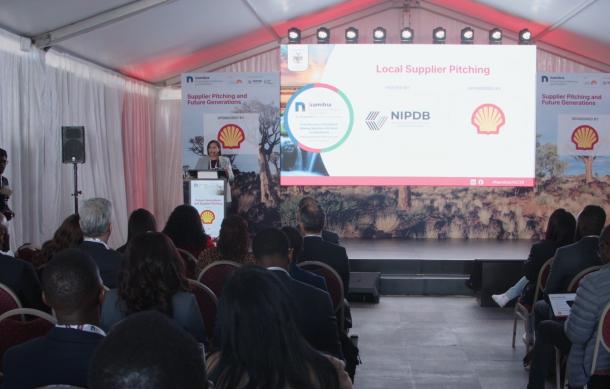
Local content should be treated as an economic development strategy and not simply as a regulatory requirement.
These were the words of Special Advisor and Deputy Head of the Upstream Petroleum Unit in the Office of the President, Carlo McLeod, at the Namibia Oil and Gas Conference in Windhoek on Tuesday.
Speaking at the Local Content Pitching Session held at the Namibia Oil and Gas Conference, McLeod emphasised that the government's position is clear that the development of petroleum resources must generate benefits that extend beyond the extraction of hydrocarbons.
Adding that the essence of local content is to create an ecosystem in which Namibians are not spectators to the industry but active participants, owners and leaders within the value chain.
"We must be precise about what local content means. It cannot simply mean a company is registered in Namibia, or that a local shareholder has been added to a structure, or that an international company opens a local office without creating substantive economic value here. Local content must mean capability located in Namibia, value created in Namibia, skills developed in Namibia, and opportunities retained in Namibia."
He therefore reminded local companies pitching at the Local Content Pitching Session that being Namibian gives them the opportunity to participate, but the competitiveness is what will sustain that participation.
Further stressing that the real promise of local content is not merely to produce oil and gas but to produce businesses, skills, jobs, and a generation of Namibians capable of leading the industries.
"Success will not be measured by how many local companies win contracts. It will be measured by whether those companies become stronger, employ more Namibians, acquire new capability, and remain competitive long after the first projects have matured. That is how we move from local participation to local leadership."
The pitching session aims to create connections, identify capability, and match Namibian enterprise with real industry requirements, while in return converting petroleum opportunities into sustainable economic value for the country.