Cuba envoy in Namibia decries US blockade impact
Breadcrumb
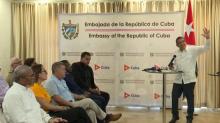
Cuba's Ambassador to Namibia has expressed concern over the impact of the economic blockade by the United States against Cuba on social sectors of health, sports, and education.
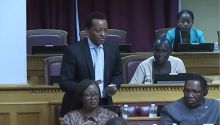
The National Assembly has unanimously adopted a motion calling on the United States of America to lift its long-standing economic, financial and commercial blockade against Cuba and remove the Caribbean nation from the list of alleged state sponsors of terrorism.
U.S. legislation, the African Growth and Opportunity Act (AGOA), meant to provide sub-Saharan countries duty-free access to U.S. markets, has lapsed.
This is despite months of negotiations for a possible extension between various African countries and the Trump administration.
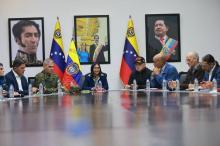
The majority of member states of the Community of Latin American and Caribbean States (CELAC) have expressed concern over the recent military deployment by the United States in the Caribbean, particularly near Venezuelan waters.
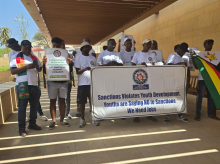
Zimbabweans living in Namibia are calling on the United States to immediately lift sanctions imposed on their country, saying they severely affect ordinary citizens.
The community argues that the measures have worsened the country's economic performance and pushed many into hardships.
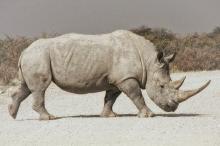
The Ministry of Environment, Forestry, and Tourism (MEFT) has announced that it granted approval for the export of 42 live white rhinoceroses to the United States.
The rhinos are privately owned and not government property, as only black rhinos are state-owned in Namibia.
President Hage Geingob has returned from the United Nations General Assembly held in New York, in the United States, and described the meeting as a success.