


Namibia has a shortage of seeds, and land is not freely available for seed production.
But green schemes such as Sikondo in the Kavango West Region are contributing to food security by setting aside land solely for the production of seeds.
Sikondo has been producing seeds for the Namibia Agricultural Mechanisation and Seed Improvement Project for about eight years now.
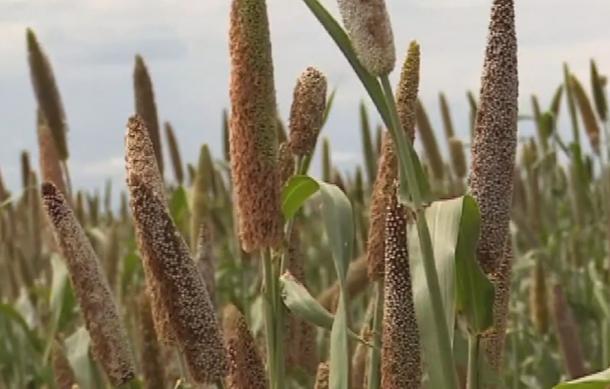
The Acting Manager of the Sikondo Green Scheme, Maxwell Nghidinwa, said, "We allocate land that we don't use that season to produce seeds such as Mahangu, the Okashana variety, and these are foundational seeds. We also produce cowpeas; we produce sorghum. The seed is the catalyst of all production, so if you don't have seeds, then you can't produce anything."
Nghidinwa says the green scheme understands the challenges faced by local farmers, so the seed production project is more like a corporate responsibility. He talks about this year's seed yield.
"We have produced almost 36 hectares of seeds that will be handed over to NAMSIP at the end of the season for them to be taken to Omahenene for repackaging and then distribute it to different ministry centres for farmers to pick it up."
The acting farm manager believes that the seed production project allows Sikondo to be involved in national programmes, which keeps the green scheme relevant.
Apart from that, producing seeds for the Namibian community also improves the soil's fertility, among many other benefits.
"We know that we only produce maize and wheat consecutively, so this gives us a chance to break the cycle, to do some crop rotation because Mahangu is a bit light, so this is like rehabilitating the soil, not only to rehabilitate the soil but also to prevent diseases in the soil that are caused or brought by certain crops that you repeatedly grow. Crop rotation is an important principle in agronomy. In the past, we never really used to implement it because we were under pressure to make sure that we produced enough maize."
The Green Scheme recovers costs from the seed production project by being reimbursed for expenses, like the diesel used for ploughing, which NAMSIP will then refund at the end of the season.