


The National Council Standing Committee members who visited government-funded agriculture projects found several of them in poor condition, with some abandoned and vandalised.
The MPs were on a follow-up visit from 13 to 24 January 2025 to assess progress and the impact of these projects in six regions.
The Standing Committee on Public Accounts and Economy discovered that many projects managed by the Namibian Industrial Development Agency (NIDA) are not functioning properly, mostly due to unpaid water and electricity bills, a lack of staff, and poor management.
In the ||Karas Region, the Naute Irrigation Project is being run with just N$5,000 per month, which is not enough to cover the basic needs of staff and the plantation.
The MPs were also shocked to find that a private distillery is using free water, electricity and raw materials from the farm without providing any clear benefit to the government.
Projects such as the Boimass Project and SME parks in Otjozondjupa have their water disconnected.
Some equipment was left unsecured, risking theft of this equipment.
In the Zambezi Region, the Manjeha Crocodile Farm remained abandoned despite nearly N$1.3 million spent on a new fence.
"In the Kavango West Region, the committee was informed of the new developments and improvements that came after the committee's visit in 2023. The farm receives a constant supply of diesel, cattle licks, medications, N$5,000 in petty cash per month and two new cars. The committee was informed that 98% to 99% of the cattle on the farm have been tagged. The committee observed that the farm only has 52 bulls for 4,000 cows; that is not a sufficient ratio as per standard best practice of one bull per 25 cows," said committee chairperson Peter Kazongominja.
The Nkurenkuru Garment Factory remained shut with no idea when it would start operations.
In the Oshana Region, the Ondangwa Tannery has not worked for 11 years due to unfinished upgrades.
The site lacks water and electricity, and the equipment faces potential damage.
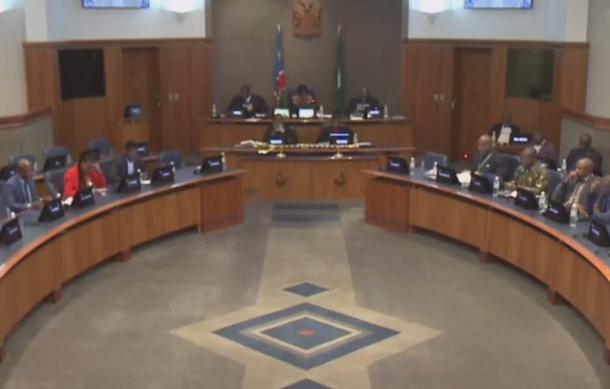
After the visits, the committee held a stakeholder meeting in Windhoek to address the problems.
Kazongominja explained that the purpose of the visits was to verify the implementation of previous recommendations and evaluate the impact these projects are having on local communities.