


The Namibian government is set to receive a N$1.5 billion loan from the German Development Bank (KFW) to support several water projects aimed at easing the country’s water crisis.
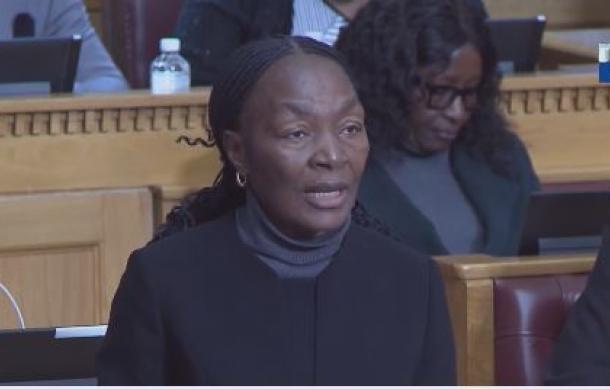
Finance Minister Ericah Shafudah announced the loan agreement in Parliament on Wednesday.
“The government then secured a loan valued at 75 million euros, which is approximately 1.5 billion Namibian dollars,” she said. “And this is guaranteed by the government of the Federal Republic of Germany through KFW, the German Development Bank. The concessional loan is really an outcome of ongoing collaboration between the two governments.”
Shafudah listed several projects that will benefit from the funding.
“In terms of the list of the projects that will benefit from this 1.5 billion Namibian dollar loan, we have Omundaungilo, Omutse Wonime pipeline, Oshakati Ondangwa, Oshali, Omuthiya, and Omutse Wonime pipeline replacement, phase one and two. Katima Mulilo extension phase two. Again, we also have some desalination plant units that will also benefit from this.”
She added that the loan comes with a 20-year repayment period and a five-year grace period.
Swapo MP Willem Amutenya called for local involvement in implementing the projects.
“The fact that now we have this as a loan, these projects must be given to the local entrepreneurs. I mean, Namibian entrepreneurs, because then we have the capacity simply to, you know, establish the pipelines. I believe we have the capacity as Namibians to have the locals help with these projects.”
AR MP George Kambala questioned the regional focus of the projects.
“Why is this loan of the infrastructure highly concentrated in all four regions? Because it seems that every time we come to a loan, it's always a project up in the north.”
NUDO MP Vetaruhe Kandorozu raised concerns about German funding patterns.
“Most of the loans and the grants, donations from the Germans, KFW Bank, and GIZ—all their interventions. They are in other regions where they committed no sin at all. Is it a sign of silencing the government so that they cannot be robust when they are negotiating the joint declaration quantum amounts? Or why do they just have more interest in those regions where they committed no genocide?”