


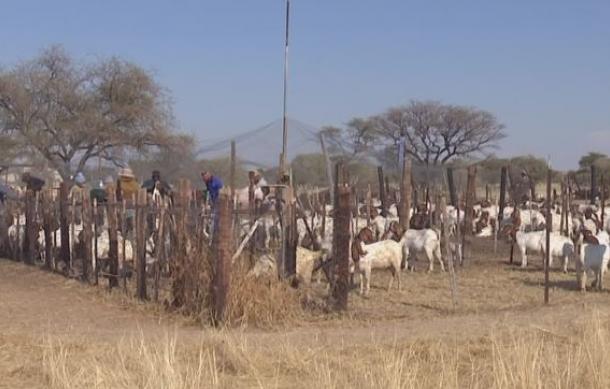
In an effort to revitalise agriculture and uplift rural communities, Swakop Uranium officially launched the Hope Farm Project at Farm Dawed in the area of Usakos.
The initiative is aimed at transforming the lives of vulnerable communities through sustainable livestock farming.
Speaking at the event, Swakop Uranium CEO Luo Wei stated that the project is driven by the SME development pillar of the Swakop Uranium Foundation, which focuses beyond just livestock distribution.
Wei explained that it is a long-term strategy to stimulate economic growth, create jobs, and improve livelihoods through sustainable goat and sheep farming practices.
Backed by a N$3 million investment, Wei said the first phase of the project began with the distribution of 630 goats and sheep to 30 selected beneficiaries.
An additional 370 animals will be distributed before the end of the year.
Set to expand to all 14 regions, the initiative employs a revolving livestock model, where each beneficiary will return 20 offspring after two years.
"We are firmly aligned with Namibia's national development goals, including NDP6 and Vision 2030, among others, particularly in addressing unemployment and reducing income disparities. We are responding to the government's call within Namibia's 6th National Development Plan to strengthen domestic agricultural input supply and innovation systems. Furthermore, there is a national mandate to boost livestock production by supporting critical areas such as animal vaccination."
Erongo Governor Natalia !Goagoses, called it a timely and transformative initiative for rural development.
The Minister of Agriculture, Water, Fisheries, and Land Reform Inge Zaamwani emphasised the importance of public-private partnerships and praised the project's revolving livestock model, where farmers return part of their stock to benefit new participants.
"Today 30 beneficiaries will receive a total of 600 ewes and 30 rams (sheep and goats). This marks the start of a new partnership between the public and private sectors (PPP). The Ministry's technical teams are heavily involved in providing veterinary services and ongoing training to the beneficiaries."
The ministry highlighted that N$4 million has been allocated for the current financial year, targeting similar efforts in the Erongo and Omusati regions.