


The country's labour laws continue to exclude the cultural and creative industries (CCIs), depriving these workers of the same protections and benefits as other sectors.
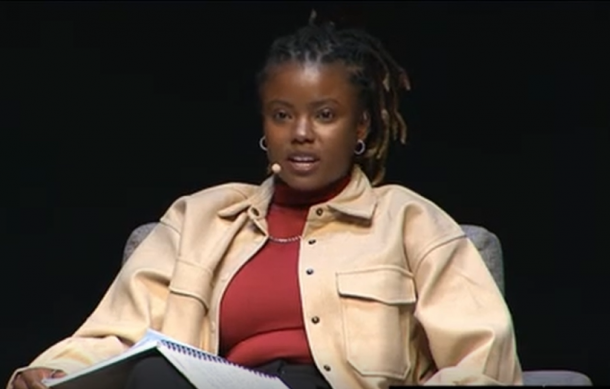
The National Arts Council of Namibia (NACN) Chairperson, Cislé Jacobs, made the remarks during the 10th World Summit on Arts and Culture, held in Seoul, South Korea.
Jacobs, joined by speakers from across the globe, said many countries, including Namibia, have ratified the UNESCO and the International Labour Organisation conventions in almost every industry with minimum standards in place.
However, for the cultural and creative industries, this is still an issue.
There is no fair remuneration, minimum standards, access to public health schemes, maternity leave benefits or even access to bank loans.
"It cannot continue to be the reason why you definitionally exclude the workers in this industry. I also argue that these local ratifications, which usually apply to other industries, don't apply to the CCIs due to collective bargaining. In this instance, there is shared responsibility between the state and various sectors or specific industries. And in that instance, it means that artists, cultural practitioners, and communities with living knowledge must organise themselves."
Jacobs indicated that it is the state's responsibility to provide minimum protection, with the industry's shared responsibility to collectively bargain through unions and organisations.
"Now, I would argue, certainly in many examples, that even in my own country, for example, the Labour Act of 2007 was initially drafted and enacted and is applicable and implemented really well as a law, but does not apply to the CCIs. And it did not need any industry to move for collective bargaining or to push trade unions. So there are two models of creating laws, labour laws. Culture is a right. Culture is labour. Culture is our shared responsibility. It is both a sector of sustaining livelihoods and also dimensions of development, such as identity, community, economy and sovereignty."
The Summit brought together 406 delegates from 94 countries, comprising artists, cultural practitioners, leaders and decision-makers from the arts and culture ecosystem.
They exchanged, debated and reflected upon how to secure the future for arts and culture with a focus on how to position culture and its value and current and future technological realities.