


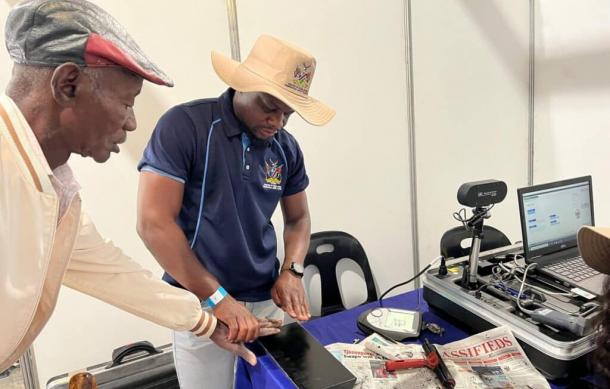
The Ministry of Home Affairs, Immigration, Safety and Security (MHAISS) has assured the nation that the electronic Identity (e-ID) card will not require biometric chips to be injected into their bodies.
The ministry said the e-ID is a physical card, which is safe, inclusive, and will minimise fraud.
The ministry, in collaboration with the United Nations Development Programme (UNDP), is visiting Otjimbingwe in the Erongo Region to create awareness about the e-ID and further strengthen community partnerships.
This is the first outreach programme, providing the community with an opportunity to ask questions before the e-ID is implemented in 2026.
"Remember when this was first introduced? People were saying that chips would be implanted in people's bodies and similar things. No, it is a card, a physical card, and, understandably, people have these myths. But what is important is just to know that when we talk about a chip, a contactless chip, it's just like your ATM card," said MHAISS Deputy Executive Director for Civil Registration, Jackson Wandjiva.
Wandjiva said the e-ID's chip is hidden between the card's layers, making it difficult to forge. "But the advantage is that that card will carry more information. It will really prevent identity theft as well as fraud. To do transactions with such an e-ID, you have to be the authentic owner of that card."
The ministry and UNDP are using individuals, whom they refer to as human libraries, such as Ronaldo |Homeb from the marginalised San community, to create awareness.
The human libraries explained how the e-ID will preserve cultural heritage by including clicks in people's names, it will reach those in the most remote areas and will include people with disabilities.
"The manual IDs we have currently, when it comes to our communities, the Khoekhoegowab community, we have surnames with characters, right? With clicks and everything. Now imagine with this particular initiative, Goagoses going to |Goagoses, our culture will be represented on a national level."
Another "human library", Mwaka Mutenda Mukweli, explained that "when it comes to banks, people with disabilities have to carry their original ID, and in most cases it is difficult for them to do that. This also applies when registering at universities or schools. The electronic ID, which is to be launched next year, will help address some of these challenges."
The ministry is putting measures in place to take services closer to marginalised communities that cannot access registration points.