


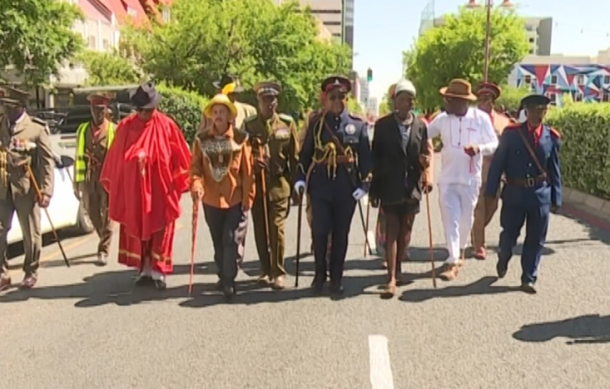
Some members of the Ovaherero community, led by Professor Mutjinde Katjiua, held a commemoration today marking the anniversary of the 1904 extermination order against the Ovaherero and Nama people.
The event, observed on October 2, was marked with a colourful parade along Independence Avenue in Windhoek, which lit up the face of the CBD.
The group marched to honour the memory of those who perished during the genocide and to bring to light ongoing demands for justice and recognition.
Several petitions were handed over by Professor Katjiua and his entourage, including one addressed to the German Ambassador to Namibia, Thorsten Hutter.
The petitions seek formal acknowledgement of the atrocities and call for appropriate reparations.
But no media were allowed inside the embassy during the handover.
"It's all about calling Germany to face the reality. Germany has committed two genocides in Namibia, the Ovaherero genocide and the Nama genocide. Germany has recognised the Jewish Holocaust and is paying reparations. But when it comes to our genocides here, they seem to have lost memory. They seem to think that we can just accept development aid. They think that is sufficient or can assist Namibians. Also, Germany still thinks that we were called to participate in the negotiations between the two governments, at least to assist our government, and we refused."
Professor Katjiua said that the struggle for justice continues.
"The extent of the damage is caused to us, so they cannot prescribe that to us. And also the joint declaration, as we know, is only a process between the two governments, the Indian government and the German government, to address the needs of Namibians. Our colleagues, our leaders, and our communities in Botswana, South Africa, Angola, the United Kingdom, the United States of America, Canada, and elsewhere could not participate."
The atrocities remain one of the first genocides of the 20th century.