


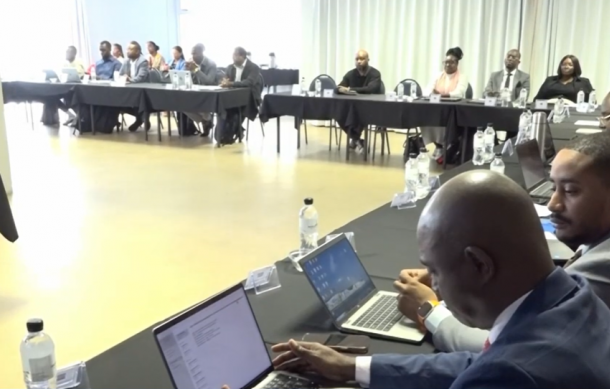
The Executive Director in the Ministry of Works and Transport, Jonas Sheelongo, said Namibia is leveraging its renewable energy and green hydrogen potential to support aviation decarbonisation efforts.
He made the remark during the SADC Annex 16 Environment Workshop underway at Swakopmund.
Sheelongo reaffirmed Namibia's support for the International Civil Aviation Organization's goals on reducing carbon emissions through sustainable aviation fuel and other cleaner energy initiatives.
"It is imperative that we must be pragmatic in our approach towards the 2050 zero carbon emission target. We believe these targets are not cast in stone, they must be reviewed to reflect global realities and new developments."
He said Namibia's journey toward sustainable aviation must include the adoption of sustainable aviation fuels and strong environmental policies.
"These fuels, derived from renewable sources, have the potential to significantly reduce carbon emissions, improve air quality, and foster green innovation within our aviation sector."
He added, achieving this vision requires investment in infrastructure and policies to make green fuel commercially viable.
"This regional workshop signals a critical shift from policy to production. It is now our collective responsibility, as the custodians of our sector's policies and infrastructure, to move beyond mere reporting and take decisive action. We must harness the power of international frameworks namely, CORSIA and the ICAO Long-Term Aspirational Goal to translate our commitments into tangible national projects. These frameworks are not just guidelines; they are catalysts for real change, guiding us toward a cleaner, more sustainable aviation industry."
Namibia aims to transform its solar and wind resources into clean aviation energy, positioning the country as a future hub for green fuel production.
The workshop, which is being hosted by Namibia through the Namibia Civil Aviation Authority in collaboration with the SADC Aviation Safety Organisation, concludes today.