


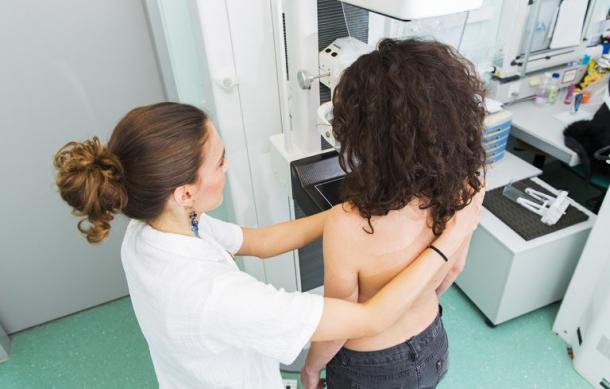
Late screening and testing for cancer have been two of the biggest stumbling blocks in addressing rising cancer cases.
Dr. Gerrit Keyter, Head of Medical Services for Palliative Care at the Cancer Association of Namibia (CAN), said late diagnoses have made treatment of cancer difficult.
The |Khomas Region has the highest number of cancer cases and has seen a significant increase in referrals of cancer.
The four northern regions of Oshana, Ohangwena, Omusati and Oshikoto also have high cases of cancer, in no particular order.
Keyter says such a state of affairs is a matter of concern.
Dr. Keyter says |Khomas accounts for most referral cases in the country because of the tertiary and more specialised centres in the region, followed by the rising number of cases in the four northern regions.
"That is the dilemma that we are facing in Namibia: that patients don't go to healthcare facilities at an early stage for screening, and if you don't screen early for the cases, then you tend to diagnose them in a later case. And that makes it difficult when it comes to treatment."
Keyter says the more advanced the cancer is, the more advanced treatment is necessary, and in a lot of cases patients don't have access to the treatment that is available.
Keyter further notes that the Cancer Association usually assists with the screening and does outreach screening, especially for cervical cancer, prostate cancer and breast cancer in the regions, in assisting the ministry of health.
"The CAN is working in collaboration with the Ministry of Health and Social Services (MoHSS) because at the end of the day, all the healthcare services actually fall under the prerogative of the MoHSS. We are just there aligning, and we are like an auxiliary service towards them," he added.
He said there is a new cancer oncology ward at the Walvis Bay State Hospital, set up with the assistance of a mining company and the Cancer Association in order to support the MoHSS.
It will be officially handed over to the MoHSS at the end of February.
"That is one of the projects that happened, and there are more future projects being aligned with the Ministry of Health, but that can only happen when we've got good collaborative work between the private sector, the NGO sphere and the Ministry of Health. So there is in the Ministry; at this moment they are having meetings regarding more accessible cancer centres."
Cancer is no longer a silent crisis in Africa but a growing public health emergency that requires urgent, equitable and sustained action, according to the World Health Organisation (WHO).