


Namibia plans to position itself to unlock a new frontier of economic growth through developing a salmon farming industry.
Experts believe the country has a huge opportunity to establish Africa's first large-scale salmon farming built on green energy, scientific research, and environmental responsibility.
Such initiative is expected to create jobs, strengthen food security, and open new export markets, as Namibia moves toward a more diversified and resilient economy, analysts say.
Reflecting on this view at a high-level engagement of industry leaders, stakeholders, and partners, Deputy Minister of Agriculture, Fisheries, Water, and Land Reform Ruth Masake agreed that the Atlantic waters indeed offer a rare opportunity for the country to enter the global salmon market.
Masake said Namibia is renowned for its rich fishery resources along the Atlantic Ocean coastline.
She noted that the fisheries sector has contributed significantly to employment, export earnings, and improved food nutrition and security.
“As a nation, Namibia is committed to economic diversification and industrial growth; we must now move beyond traditional harvest-based fishing toward farming-based fishing of high-value aquaculture and agro-processing industries.”
Masake underscored that salmon is among the most traded and consumed fish species globally, commanding premium markets in Europe, Asia, and North America.
“Namibia's cold Benquela current system, stable governance, and investor-friendly policies provide a competitive advantage if properly structured; salmon aquaculture can become a catalyst for the expansion of the country's industrial base, driving manufacturing, feed production, logistics, packaging, research, and technology development.”
Director of Aquaculture and Inland Fisheries in the Minister of Agriculture, Fisheries, Water and Land Reform, Rudi Cloete, echoed the same sentiment, highlighting that the fishing industry has been a cornerstone of the economy.
He further said that fishing's contribution to the Gross Domestic Product (GDP) is declining, especially with reduced catches for traditional species.
Cloete emphasised that this is not a failure but a call to evolve and create jobs and boost local processing.
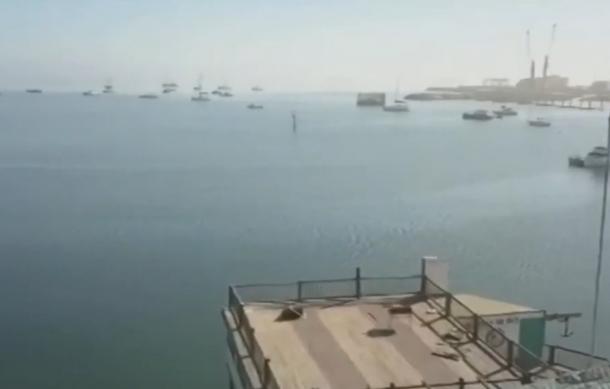
“The future has arrived in the icy cold Benguela current of Lüderitz; stable cold waters have created the perfect conditions to grow Atlantic salmon."
He, however, noted that the opportunity comes with a profound responsibility in regard to pollution, fish escapes, and diseases.
“We cannot ignore the environmental risks that have plagued salmon farming elsewhere, ladies and gentlemen. Our guiding principles must be sustainability, not as a slogan but as a non-negotiable commitment. The government will enforce rigorous environmental management plans.”