


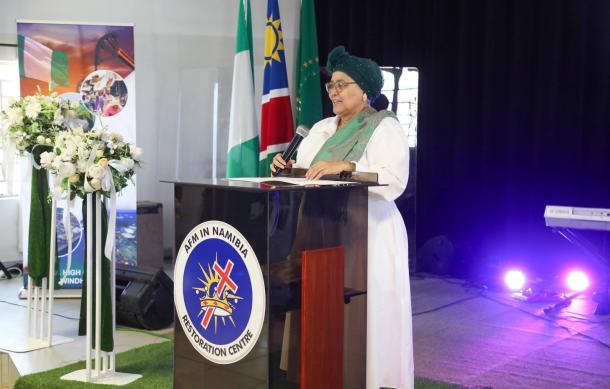
Vice President Lucia Witbooi has called on churches to take active roles in their communities.
Witbooi made the call during the World Day of Prayer for Women, held at the AFM Restoration Center.
The Vice President wants Namibians to view churches not only as places of worship but also as centres of healing, reconciliation, and transformation within communities.
Churches, she further said, should continue their vital work of providing care, compassion, and practical support to survivors of violence, while steadfastly challenging the harmful attitudes, cultural norms, and structural injustices that perpetuate violence in communities.
"Prayer must inspire action. Faith must translate into service. Churches must not only remain places of worship but also centres of healing, reconciliation, and transformation within our communities. And I want that part to be listened to very carefully. The churches must come out and play their role, not only in politics but also in the daily lives of what is going on in our streets, in our communities, and in our traditional leadership. The church and the church leadership must play, come out and play their role."
The focus of the prayer was Nigeria, highlighting the challenges it faces, including banditry, religious fanaticism, kidnapping, child marriages, and security issues.
Dr. Larai Aku-Akai explained that "we have been told stories of people in areas where bandits come in and take over a location, and people are tired of running. So they just stay with the bandits. And negotiate with them. A bandit can walk to a father and say, 'Bring your daughter well-dressed this time, too, for me.' And then the father will have to either bring the daughter or face being killed."
The Women's World Day of Prayer began in 1887, evolving from 19th-century missionary prayer initiatives in the US and Canada.
In Namibia, the prayer day started in 1991 through the Council of Churches in Namibia (CCN).