


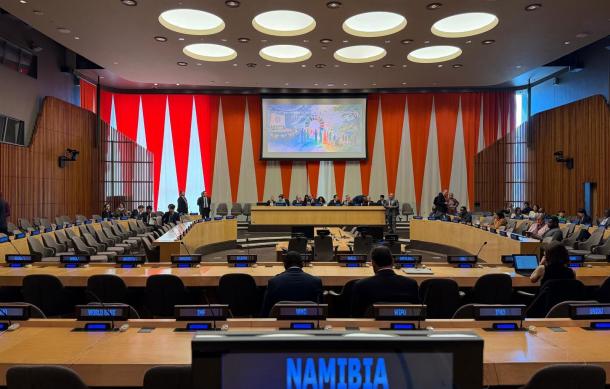
Permanent missions at the United Nations, including Namibia’s, attended a briefing on the unfolding humanitarian situation in Cuba, where officials warned hospitals are suspending surgeries and facing severe medicine shortages.
Edem Wosornu, director of the Crisis Response Division in the UN Office for the Coordination of Humanitarian Affairs, chaired the session after a three-day assessment visit to the island. He described the crisis as a “slow burn” that is steadily compounding and affecting every aspect of daily life, with limited national capacity to absorb further shocks.
“With the onset of the summer period, elevated temperatures and reduced access to water, sanitation and hygiene services are expected to further increase public risk,” Wosornu said.
The UN resident coordinator in Cuba, Francisco Pichón, dialled in from Havana and reported that more than 100,000 patients, including 12,000 children, are waiting for surgeries delayed by power outages and supply shortages. “What we are witnessing today in Cuba is no longer just an energy crisis, but it is really a situation that has evolved into a growing humanitarian emergency that is affecting millions of people every single day,” he said.
Cuba’s ambassador to the UN, Ernesto Soberón Guzmán, blamed US policy for the humanitarian fallout. “The complex humanitarian situation Cuba faces today has a direct cause: the inhumane policy of collective punishment imposed by the United States against my country,” he said, calling US measures “a cruel policy” that has inflicted mass suffering.
Several other delegations offered their perspectives. Vietnam’s UN ambassador, Do Hung Viet, said updates from his embassy in Havana confirm the crisis is driven partly by natural disasters such as Hurricane Melissa and the long-term effects of embargoes. Brazil’s ambassador, Sérgio Danese, urged that humanitarian needs must not be politicised and that assistance should follow the principles of humanity, neutrality, impartiality and independence.
Russia’s representative, Vassily Nebenzia, said recent US restrictions on fuel supplies and broader economic measures have aggravated Cuba’s fragile situation. The US delegation, represented by Ambassador Michael Waltz, countered that Cuba’s economic model — not an embargo — is the primary cause of shortages, calling claims that an oil blockade is to blame “untrue.”
Namibia’s deputy permanent representative, Absalom Nghifitikeko, echoed concerns for Cuba and reaffirmed Namibia’s solidarity. He framed the issue in terms of sovereignty and described the US economic, financial and commercial blockade as unjustified after 67 years. Nicaragua’s minister counsellor, Alina González, called for international solidarity and an immediate, unconditional end to the blockade.
Following the briefing, the Namibians In Solidarity with Cuba Campaign announced it will hold its first media briefing on Thursday to update efforts to raise funds for the island nation.