


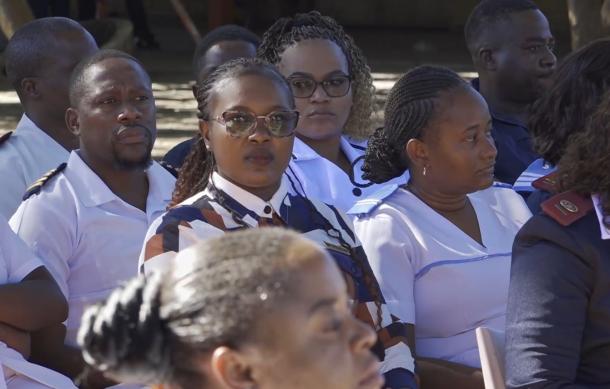
The Zambezi region will continue to lag behind in development if resources continue to be allocated using the same formula as the rest of the country.
The Regional Health Director for the Zambezi Region, Woita Kapumburu, said that the region's unique geographical location and recurring challenges require additional support to ensure residents have equitable access to healthcare.
During a presentation on budget and finance, with a focus on capital projects, Kapumburu says the region, which has recorded about 31,000 malaria cases from January to date, accounting for approximately 35% of the country's total cases, requires additional resources to effectively respond to disease outbreaks and other health challenges.
"This is winter, so some of those things require us to have extra resources, but we are not saying all resources should come to us, but our uniqueness speaks for itself, and I think we need extra attention."
He highlighted logistical constraints, saying healthcare delivery in the floodplains depends on both road and boat transport.
Many rural health facilities are unable to manage complicated medical cases, resulting in referrals to Katima Mulilo State Hospital or facilities outside the region.
Limited vehicles, inadequate ambulances, the region's vast distances and difficult terrain continue to affect service delivery.
Additionally, attracting and retaining healthcare professionals remains a major challenge, despite the availability of vacancies, with many Namibian health professionals being unwilling to work in remote areas, while applications to recruit expatriate staff are often declined on the basis that the positions should be filled by Namibians.
"We started, for example, to have medical doctors at health centres; we had one at Bukalo and Sibbinda. We were looking forward to filling them so that all three health centres would have medical doctors, but as I speak to you now, the one for Sibbinda has left. The one at Bukalo, I understand, is transferring to come to the hospital, which I understand because the hospital is limping; some of the doctors have left."
Despite these challenges, Kapumburu says Katima Mulilo State Hospital is making steady but slow progress towards becoming an intermediate hospital, with the availed intensive care unit and a dialysis unit, reducing patient referrals elsewhere.
The hospital now has six specialists, enabling more complex medical procedures locally.
The directorate management is also working on strengthening financial controls to ensure public funds are spent efficiently, with tighter oversight on transport, overtime and operational expenditure.