


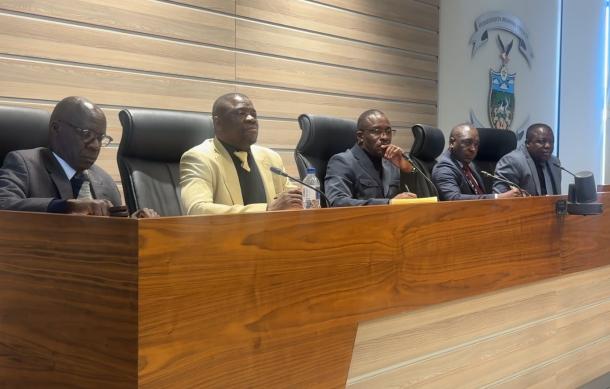
Vice Chairperson of the National Council Standing Committee on Transport, Infrastructure and Housing, Christopher Likuwa, says there is a need for Namibia's transport systems to be designed, managed and regulated in a manner that prevents deaths or serious injuries.
He said this when opening the consultative meeting with stakeholders in Otjiwarongo, where the committee is engaging on the motion on the urgent need for critical measures to combat the rising road accidents crisis in Namibia.
Likuwa says the traditional approach of blaming accidents solely on driver behaviour is no longer sufficient, and as such, a safe system approach must be embraced.
"This means strengthening road infrastructure standards; improving vehicle inspection and roadworthiness systems; enhancing law enforcement capacity; addressing dangerous driving behaviours; improving emergency medical response; strengthening public awareness; introducing innovative technologies; and ensuring that vulnerable road users, including pedestrians, cyclists, passengers and communities living along major transport corridors, are adequately protected."
The vice chairperson further stressed that road safety forms part of the national transformation agenda, with the aim of providing efficient, safe and reliable transport systems.
Otjozondjupa Governor John ||Khamuseb said intensified efforts must be deployed along the region's high-risk zones.
"Let us take hands and make these roads of our region and country, in general, safe. We appreciate what the authorities did in the areas of Swakopmund and Arandis by putting up cameras and introducing awareness. Such kinds of actions can also be redoubled on our roads."
Roads, education and law enforcement stakeholders all spoke in unison that the region reintroduce the road safety forum, create safer road crossings and speed-calming measures, increase road patrol teams in at-risk zones to that of auditing driving schools and strengthen punitive actions against repeat traffic offenders.
This National Council consultative exercise is part of its evidence-based oversight responsibility to understand the realities on the ground, assess existing interventions, identify gaps and recommend practical, sustainable and implementable solutions.