


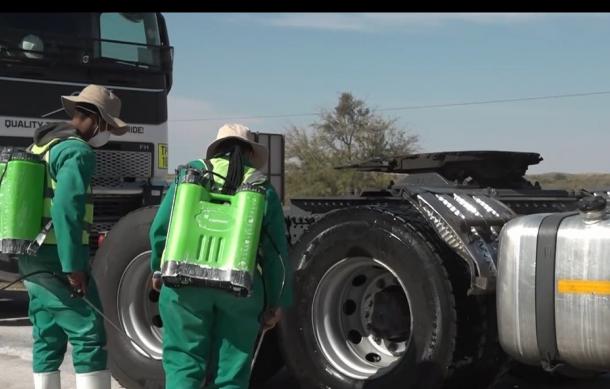
The Directorate of Veterinary Services remains committed to a zero-tolerance approach to protect the country's foot-and-mouth disease-free status.
Speaking to NBC News, senior agricultural inspector Erastus Nangwasha, stationed at the southern border post of Ariamsvlei, said there would be no easing of existing strict measures to prevent FMD from entering the country.
Neighbouring South Africa is currently battling with escalating FMD outbreaks.
The highly contagious viral disease affects cattle, sheep and pigs, threatening livestock production and international trade.
"Vehicles arriving from South Africa to Namibia will be disinfected on their tyres, as it is assumed they may have been in areas affected by foot-and-mouth disease (FMD). The virus can survive on tyre surfaces, necessitating disinfection," stated Nangwasha. "The World Animal Health Organisation has recommended various chemicals for this purpose; however, in Namibia, we use a sodium carbonate solution."
Nangwasha further explained that drivers and passengers are also required to disinfect their shoes in the footbath.
Any consignment of dairy and meat products is not allowed into the country unless accompanied by a health certificate issued by the exporting country's state veterinarian.
The agricultural inspector highlighted some challenges such as inadequate border terminal space.
"Resistance to change and non-compliant clients are significant challenges. Many individuals are aware of these issues, yet they choose to purchase products in South Africa, believing that the prices are more favourable and the packaging is superior. Consequently, they attempt to bring these products into Namibia. Additionally, in Ariamsvlei, there is a lack of proper supermarkets nearby. The closest one is in Karasburg, but it also does not offer a wide range of shops."
According to Nangwasha, plans are in the works to install fences as control zones to maintain the country's FMD-free status.