


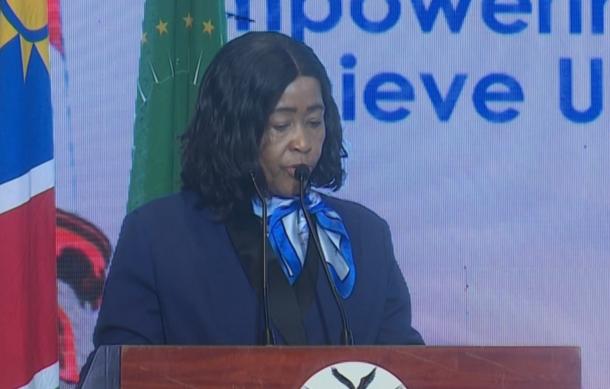
Prime Minister Elijah Ngurare says Namibia is making progress in expanding access to water and sanitation but admits the country still faces significant challenges in reaching every community.
Dr Ngurare called for urgent improvements in service deliveries.
Despite recording gains in water and sanitation, Ngurare says many Namibians are still waiting for reliable access to essential services.
Speaking during the 19th edition of the commemoration held in Swakopmund, Ngurare said the country remains under pressure from drought, climate change and ageing infrastructure.
He revealed that while Namibia has achieved 91.4% of access to safe drinking water nationally, some communities continue to rely on weekly water tanker deliveries because groundwater is either saline or produces low yields.
He also said sanitation coverage stands at 60% nationally, with peri-urban and rural communities among those most affected by limited services.
His address was read by Minister of Agriculture, Fisheries, Water and Land Reform, Inge Zaamwani.
"45 suitable boreholes awaited equipping at the end of the quarter one period. Some communities still depend on weekly water tanker deliveries because groundwater is saline and low-yielding; this must be addressed with urgency. Similarly, sanitation projects at schools, clinics and public places have been affected by procurement delays, contractor non-performance, site abandonment and unresolved responsibility for operation and maintenance. Ageing infrastructure, limited operational resources and emergency expenditure continue to constrain service delivery."
He warned that government cannot measure success by infrastructure alone.
"We recognise these achievements, but we must not equate completion of activities with service delivery. A drilled borehole that remains unequipped does not yet deliver water to the people. Infrastructure without maintenance, accountable ownership and community participation cannot provide a sustainable public service. We remain far behind from meeting SDG6 on access to sanitation, especially in rural areas."
He called for stronger institutions, better project management and greater accountability across government to ensure communities receive the service they need.
He also urged stronger partnerships with regional councils, the private sector, development partners and communities to accelerate progress towards universal access to water and sanitation by 2063.