


Judicial stress is not a weakness that must be stigmatised but should be seen as a natural human response to the demands of the jobs judges and magistrates do.
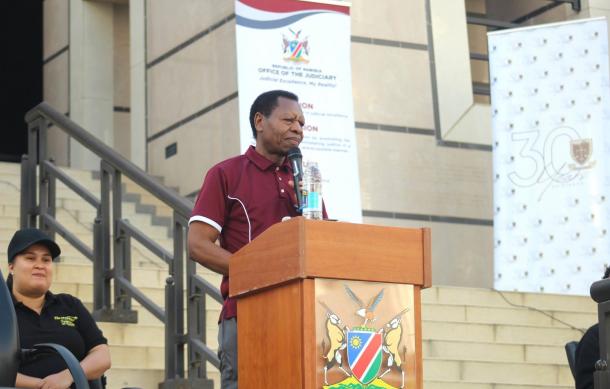
These were the words of Chief Justice Peter Shivute at the International Day of Judicial Well-Being in Windhoek today.
“The National Day of Judicial Well-being, under the Nauru Declaration on Judicial Well-being, was adopted by the United Nations General Assembly in March last year.”
The day aims to recognise the importance of judicial wellbeing in safeguarding the independence, integrity and effectiveness of judiciaries worldwide.
Chief Justice Shivute, who has about 40 years of judicial and legal experience, welcomed the declaration.
He said for a long time judicial officers have received insufficient attention, partly because the nature of judicial office has constrained them from speaking openly about the difficulties they face.
"I will not pretend that judicial work will ever become easy. I know from my own years on the bench what it is to sit late over a record and to give up weekends that belonged to my family. The demands are real and, at present, they are considerable. What I do not accept is that they must be met at the cost of our health.”
Shivute said the robes that judicial officers wear and the offices they hold do not make them immune from the ordinary limitations of being humans, as they also experience occupational, physical, social, emotional and spiritual stresses.
“Judicial work is demanding, and stress is a natural human response to those demands. It is important for us to acknowledge this. Judicial officers are required every day to make decisions affecting liberty, livelihoods, families and property. They must absorb large volumes of information, manage demanding caseloads, confront difficult human circumstances, and still approach each matter with patience, independence and impartiality.”
He, therefore, noted that judicial well-being deserves deliberate attention from all stakeholders, as the demands of judicial offices are real and demand composure at all times.
“Whatever the complexity of the case, the pressure of the workload, or the gravity of the decision to be made, a judicial officer is expected to remain calm, measured, and in control. However, what is visible above the surface tells us very little about what is happening beneath it.”
Shivute added that sometimes support begins with simple actions, such as noticing a colleague doubt themselves, making time to listen, and ensuring that nobody feels the need to carry the burden of their work alone.
The day is observed internationally on 25 July and Namibia observed the day for the first time.