

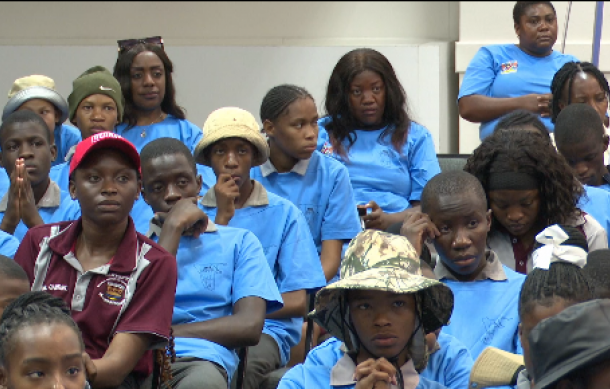
The deaf community is calling for greater recognition of sign language and equal access to education, employment, healthcare and public services.
The call was made during a march commemorating the International Week of the Deaf.
Members of the deaf community took to the streets as part of the International Week of the Deaf, observed from 21 to 27 September.
The week coincides with the International Day of Sign Languages and is commemorated globally.
This year's theme is "Declaring Deaf People's Human Rights".
Speaking on behalf of the Minister of Education, Deputy Executive Director Edda Bohn says the deaf community is not seeking charity but recognition of its rights.
"The deaf community of Namibia is not a group of people waiting to be helped. You are already the linguistic and cultural experts in your own right, your community, your own language, our Namibian Sign Language, our own history and our own contribution to our nation. Our Constitution in Article 3 guarantees every Namibian the right to learn in their mother tongue. And in education, we recognise the Namibian Sign Language as the mother tongue of our deaf Namibians. We are not speaking of charity. We are speaking about the Constitution, about the basic human right, your right, and our right."
But challenges remain in education, with concerns that many deaf learners do not progress to high school.
The community is calling for more interpreters and teacher assistants.
Salmi Amukwaya, a local learner, says awareness must lead to respect and equal opportunities.
"Deaf awareness is not about giving sorry for Deaf people. That's not the situation. It is an opportunity for us to be respected and to create awareness. First we need to respect us to have equal rights, to be included and to be understood. Everybody deserves to be heard and to be respected, and the Deaf people's language needs to be accepted. Our hands have a language. Our community has a history, and our voices may be different, but our rights are equal."
The community says interpreters are needed not only in schools but also in hospitals, workplaces and other public services.
The Office of the President's Disability Divisions Deputy Director, Mercy Kufuna, says these rights cannot be optional.
"Deaf persons also have rights, and those rights must be respected. And rights are not optional; they cannot choose not to."
The Namibian National Association of the Deaf has also raised concerns about employment, including how deaf applicants are accommodated during job interviews.
The community is calling for greater recognition of Namibian Sign Language and meaningful inclusion in education, employment and public life.
It says technology and innovation can help bridge communication gaps and make sign language more accessible.