


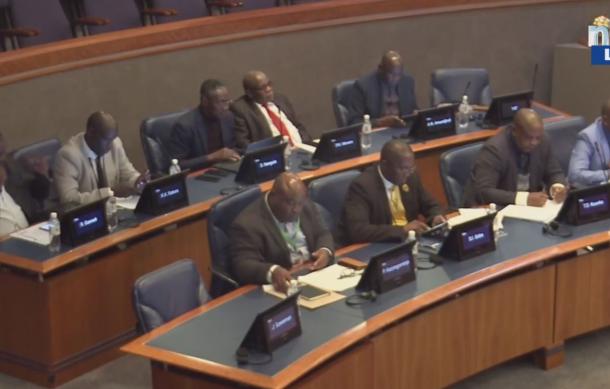
Members of Namibia’s National Council have voiced strong concerns about the rising cost of electricity and the slow pace of rural electrification, urging that rural communities receive the same priority as urban areas and proposing the adoption of solar energy solutions.
Andreas Amundjindi, MP for Uukwiyuushona Constituency, highlighted the unaffordability of electricity, stating, “Electricity is too expensive nowadays. It's no longer affordable. If you go to buy electricity for N$100, you only go home with 40 units. You only go with 40 units, point two. While households with a lower socioeconomic background, if they go to the shop to buy electricity for N$50, they only go home with 20 units. What is that? It's not good.”
Bennety Busihu, MP for Kongola Constituency, acknowledged the electrification of several schools in Zambezi but criticised the limited funding allocated for these projects. “We really appreciate that several schools in Zambezi have been electrified. And some schools have also been identified to be electrified, but the problem here is that the allocation which is given to electrify schools is so little,” Busihu said.
Micky Lukaezi, MP for Sibinda Constituency, drew attention to schools in the Zambezi Region that still lack electricity. “You can find a school that doesn't know what the light is. But they are in Namibia. You don't know when you arrive; are you in Namibia or somewhere else? So, how are these people living? There are schools there, and we are talking about the technology. We are in a technological world where power is necessary. So please, we need more budget to recover in the Zambezi Region. If there are any feasibility studies, please let them be done; otherwise, we are far behind in the region. As far as the electricity we are talking about here is only for government schools,” Lukaezi stated.
Johannes Karondo, MP for the Kapako Constituency, emphasised the urgent need for electricity in rural communities. “Our community today in rural areas do need electricity. And I should even say that every home now is crying to be electrified. You know that there's a national priority now of 2040, so it is clear that everyone should have access to electricity. But I think the pace is a bit slow,” he said.
Paul Isaak, MP for Gibeon Constituency, criticised the implementation of the rural electrification programme, suggesting that some farms are consistently left out. “Rural electrification. I don't know how this SWAPO government is functioning, really. They start with a rural electrification programme in the communal areas. They have, for example, 10 farms on the road. They omitted some of the farms every time. That's why I'm always saying these lines are SWAPO lines,” Isaak remarked.
Peter Kazongomindja, MP for Aminuis Constituency, called for the electrification of all villages along existing power lines. “Can we really electrify all the villages where the electrical line is passing? The line already exists. It's just to bring down the electricity to the village. Can we please assist in doing so, so that the villages where this line is passing can be electrified?” he urged.
Emma Muteka, MP for Windhoek West Constituency, questioned why solar energy has not been more widely considered for rural electrification. “So when we are talking about electrification, especially in the rural areas, I'm not so sure why we are not exploring the idea of taking up solar. So I would want to really implore that the ministry look into it because you can see that it's taking quite a while to electrify,” Muteka said.