


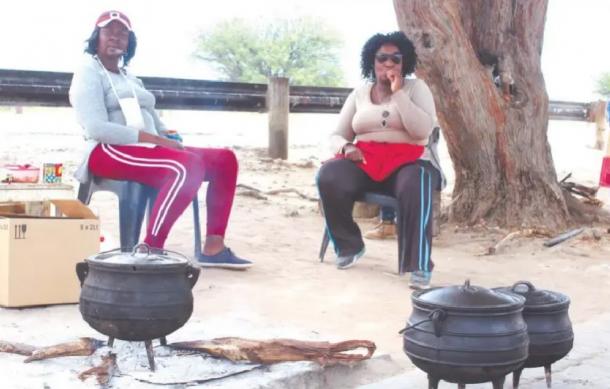
Some small business owners operating along the Trans-Kalahari Corridor at Witvlei say that if it were not for travellers on the highway who support them daily, they would remain job seekers.
A vendor, Mara Kahorere, says she came to Witvlei as an employee at the abattoir, hoping that she would earn a decent salary to support her family.
But a few years later, the slaughterhouse closed its doors, leaving most of them unemployed.
Kahorere says she did not waste time and ventured into selling grilled meat, or kapana, as it is popularly known—a business that she has been running for more than fifteen years now.
Despite the challenges she faces, Kahorere is able to sustain her family rather than wait for government handouts.
"It's much better being here rather than idling at the village. Who are you waiting for? With this business, I managed to buy myself a car. That's why I'm saying, for those who are just sitting doing nothing, wake up, my fellow Namibians," she says, adding, "I used to hear people complaining while doing nothing; money is everywhere, even selling sweets or cake."
She said the community wants a place where they can buy meat for their businesses.
Another saleswoman at Witvlei, Uetuesapi Mbiriona, states that if it was not for her bold decision, she would not be where she is today.
"This business supports my school-going children and even pays my rate and taxes for my small house here at Witvlei; my life depends on this business."
The Witvlei traders are also calling upon the government and the private sector to provide training in various areas to improve their operations and contribute to the economic growth of the Omaheke region.