


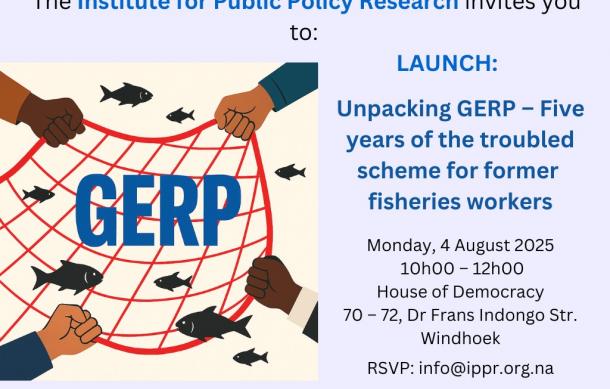
The Institute for Public Policy Research (IPPR) has stressed that transparency and oversight are non-negotiable factors when it comes to the Government Employment Redress Programme (GERP).
The programme, launched in 2020, aims to restore employment and dignity to fishermen.
IPPR has launched a research report, titled 'Unpacking GERP – Five Years of a Troubled Scheme for Former Fisheries Workers'.
Research Associate at IPPR, Frederico Links, acknowledged the efforts by the government to address the plight of the fishermen.
"About 2500 fishermen or fish workers have been absorbed via the GERP scheme by government fishery workers. Some of them, since the beginning, received (late 2020) an average of about N$4,000 a month over this five-year period under the scheme, so it is something, and it has to be acknowledged."
Links added that the absence of public reporting, independent audits and participatory mechanisms undermines the public's confidence in the redress initiative and sets a weak precedent for future interventions.
The initiative should also be data-driven to ensure that the most affected individuals are reached.
"Redress should build resilience and not just fill gaps. The feeling among the former fishermen is that it's a gap stopper; it's not a substantive scheme that can get them back on their feet. The scheme must be linked to skills development, as they want skills development and psychosocial support, and they want sustainable livelihoods, and a lot of them know that the fishing sector is not in a good state; it's not producing many jobs."
Representatives from fishermen's associations also shared their thoughts on the redress programme.