


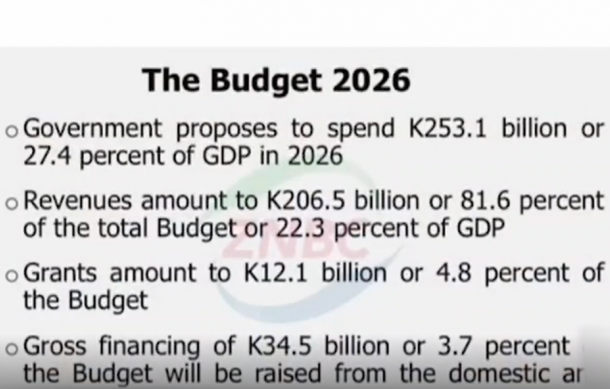
In its quest to reduce dependency on foreign aid, Zambia has for the first time presented a national budget of an equivalent of N$184-billion.
Its Finance Minister Situmbeko Musokotwane presented the budget in Parliament with an allocation of N$40-million to each of the 156 constituencies to decentralise development. 81% of the budget will be sourced locally.
The funding has been gradual since 2021, when the new government was elected.
Instead of the central government remaining at the centre stage of deciding where to place social amenities such as schools, hospitals and roads, among others, constituents have been empowered to handle their local needs.
From the initial 1 million per constituency annually, the Zambian government calling itself a "new dawn" skyrocketed the figure to 27 million per constituency in 2021, raised it to 30 million the following year and eventually 40 million next year.
Already, local communities have been able to construct their own infrastructure according to their needs without waiting for the central government to decide on their behalf.
Other than creating employment for the local communities, the move has created accountability for government funds, as local groupings dubbed
"constituency development committees" are drawn from the cross section of representatives, including the church, traditional leadership and ordinary citizens; politicians have very little impact.
To cement this move, in the next fiscal year, the government of Zambia has restricted its sources of income to tap from the local industries such as mining, agriculture and tourism for self-reliance.
The budget has also taken care of the pensioners by increasing the numbers of beneficiaries and stipends for all the aged, the less privileged and the differently abled.