


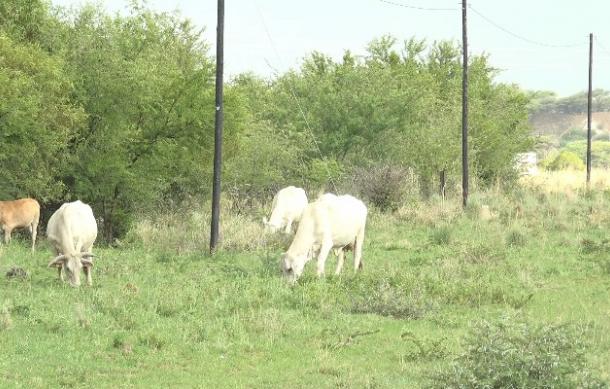
The Municipality of Grootfontein announced plans to impound stray livestock roaming the streets and informal settlements of the town.
In an interview with MICT Otjozondjupa recently, the Acting Chief Executive Officer of the town, Indileni Lungameni, said that about 500 cattle, goats, sheep, pigs and donkeys are recorded in the council's registers.
"You might be aware that in 2019-2020, the country experienced a drought situation; as a result, most farmers as far as Omaheke had to send some of their animals because of a lack of grazing opportunities in those regions. So as a town, we found ourselves turned into a farm. It has become a huge concern to the council and to the residents. The animal has been posing a threat to traffic flow and has been damaging people's property, and by that time the council was caught off guard, as there were no impounding regulations to effect the impounding of animals."
Lungameni added that two years ago, in conjunction with the line ministry and that of Justice, they initiated the process to draft the animal impounding regulations to enable the council to impound animals so that the town has urban centre standards.
Lungameni warned residents keeping livestock within the boundaries of the town to remove their animals from the town or face the consequences.
"So a stern warning to those livestock owners that now, we have now the legal teeth to impound those animals, keep them in our kraal for a certain period, and if they fail to collect and pay the fine stipulated in the tariff, we will take action on those animals. As we speak now, we are going to send out a final reminder to those illegal livestock owners to remove their animals. We give them a grace period of less than a month to remove their animals from there; if we find any animals, we will now start taking action."
Lungameni further stated that auctioning of impounded livestock, a two thousand dollar fine, imprisonment of about six months, or both, are among the punitive measures livestock owners may face once the municipality enforces the gazetted law, which came into effect on 31 December 2025.