


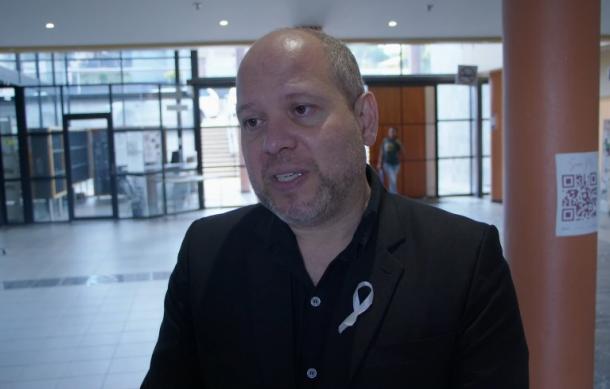
The Chief Executive Officer (CEO) at the Cancer Association of Namibia (CAN), Rolf Hansen, says cervical cancer remains a huge challenge in Africa, and Namibia is no exception.
Hansen says cervical cancer is one of the most preventable, treatable and curable cancers; however, the war against it is yet to be fully won.
Hansen says the Ministry of Health and Social Services (MoHSS) has rolled out the HPV vaccination against cervical cancer, but the uptake has not been good.
"Perhaps it's cultural, perhaps it's fear, perhaps it's lack of knowledge. I hope that it is not because we are spreading misinformation. We have to identify what these challenges are, and this session was an incredible turning point."
He says screening needs to be increased, vaccine uptake needs to be strengthened, and then treatment of the disease itself needs to be decentralised.
"Cervical cancer is the one cancer that our ladies should not be dying from. So the message is clear. Woman, we don't want you to be a patient. We want you to be a client of health, get screened and refrain from being a patient and suffering from cervical cancer because that is unnecessary."
He emphasised that it's a collective responsibility that vaccination uptake, understanding what the HPV vaccination is all about and that HPV DNA testing.
Senior Health Programme Officer for Cancer of the Reproductive System at the Ministry of Health and Social Services, Tuwilika Kamati, notes that cervical cancer is the second most prevalent cancer among women in Namibia and the fourth globally.
"We are not charging anything because this is a health promotion and prevention programme, so we want the public to come for screening. We alluded to the HPV vaccination, which is the primary prevention, being available at all the public health facilities. It's also free, and it's available for all girls aged nine to 14 years; they can come, they can have it, and then we prevent cervical cancer."