


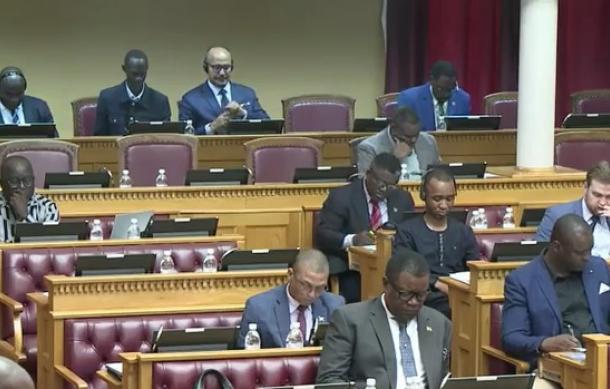
Members of the National Assembly have urged the Electoral Commission of Namibia to introduce continuous voter registration to avoid congestion ahead of elections.
The suggestion was made during the ECN’s budget discussion of N$181 million for the 2026/27 financial period.
“If we can empower the ECN to continuously conduct voter registration, replacing lost voter cards would be much easier than registration in its current format,” said Vaino Hangula of the AR.
Deputy Minister of International Relations and Trade, Jenelly Matundu, also gave her opinion.
“If we move towards continuous voter registration, there will definitely be additional savings.”
IPC MP John-Louw Mouton also shared his view.
“We are now working towards electronic IDs at Home Affairs. I recommend that this funding rather be redirected to Home Affairs to support this system and ensure that people can vote using their IDs.”
Deputy Minister of Education, Dino Ballotti, emphasised the need for integration.
“We must find practical ways to integrate local authorities, regions, and constituencies into the barcode system for new national ID applications. We can also benchmark against South Africa, where national IDs are used for voting. This approach could significantly improve voter turnout.”
IPC MP Rodrick Likando also weighed in on the operations of the ECN.
“We have it on record that in the last two elections, there were approximately 40,000 rejected ballots. What does this tell us? It shows that our voters still need education.”
IPC MP Nelson Kalungula stressed that parliament should assess the budget based on inputs, processes, outputs, and impact. "I do not see sufficient impact when it comes to voter education by the ECN," he noted.
IPC MP Elvis Lizazi also questioned the ECN’s mandate on voter education.
“They are supposed to conduct voter and civic education continuously. Yet, they are nowhere to be seen. So, where is this budgeted money going?”
Swapo Party MP Sebastiaan Karupu concluded.
“If we are to avoid more spoiled ballot papers, we need to allocate funds for printing materials, reaching communities, and providing voter education.”