


Namibia's biological resources are among the most diverse and ecologically significant on the African continent.
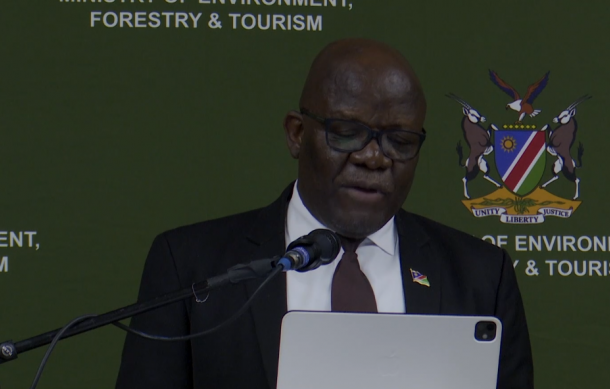
Therefore, the Ministry of Environment, Forestry, and Tourism (MEFT) is facilitating a three-day Access and Benefit Sharing (ABS) sector training for researchers, regulatory/law enforcement officers, and the media in Windhoek.
The aim is to deepen sectoral knowledge of Namibia's ABS legal framework, including the Nagoya Protocol and the Namibia ABS Act. The Nagoya Protocol is an international agreement that aims to share the benefits arising from using genetic resources fairly and equitably.
MEFT Executive Director, Sikongo Haihambo, explained that "our devil's claw applies to over 90% of the global market. Our marula value chain, led by the Audafana Women's Co-operative, is a model of women-led benefit sharing that is recognised internationally. But we must ask ourselves, when will Namibia move from supplying raw materials to hosting laboratories, extraction facilities and product development centres that turn our genetic resources into finished goods? When? That is the biggest question. The answer begins here in this room."
The three-day national training programme brings together key stakeholders, researchers and academia, regulatory and law enforcement officers, and media practitioners to build a shared understanding of ABS obligations, processes, and national governance structures.
Kauna Schroder is the Advisor for the Environmental Commission Office. She stated, "Since the enactment of our legislation in 2017 and the ratification of the Nagoya Protocol, we have made significant strides. And for those institutions that work with us, we appreciate it. But we realise that we need to take it a notch further. We need to ensure that we establish the institutional legal architecture for ABS governance. However, effective implementation requires that a broad range of stakeholders from researchers and regulators to law enforcement and media understand the ABS and their respective roles within it."
Economist Vitjitua Katjita highlighted the value of indigenous natural products in cosmetics and pharmaceuticals and their contributions to Vision 2030, NDP6, and the article on beneficiation.
"The way forward requires investments in research, laboratories, processing facilities, and public-private partnerships. It also requires strong evidence, prediction of indigenous knowledge and support for all American brands that can compete globally in cosmetics and pharmaceuticals. The media's biodiversity should not leave our borders as raw materials but return to the world as premium products broadly made by Namibia."
The training highlighted the need to research, capture and regulate indigenous plants.