


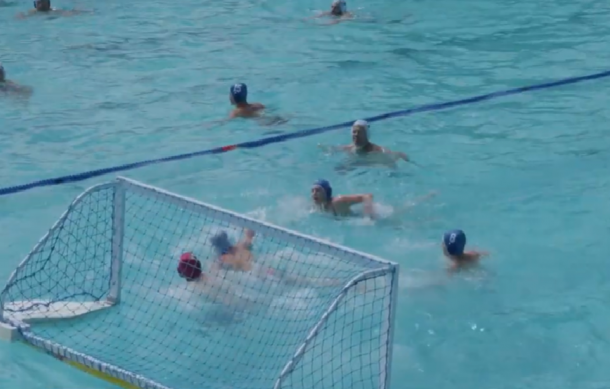
Water polo, one of the world's oldest Olympic team sports, is gradually growing in Namibia following years of inactivity.
The sport combines swimming, teamwork, and endurance, with local clubs working to increase awareness and attract new players.
Water polo is a team sport played in deep water, combining elements of rugby, football, and basketball.
The sport requires constant movement, with players treading water and swimming throughout the match.
Players compete in teams and move the ball across the pool without touching the ground.
Water polo has been part of the Olympic Games since 1900 for men, while the women's competition was introduced in 2000.
Dr Ndeulipula Hamutumwa, President of the Namibia National Olympic Committee, praised efforts to revive the sport and create opportunities for young athletes.
“It was introduced to a number of communities that can enjoy the sport. As you know, you use a ball and water together, and this is becoming quite a good niche in Namibia in terms of creating new hype and a new discipline that young athletes can play and hopefully develop in."
Despite progress, the sport continues to face challenges, including limited player numbers and low public awareness, with many Namibians still unfamiliar with water polo.
Riaan Steyn, President of the Namibia Aquatic Sports Federation, said it is important to diversify aquatic sports development in the country.
“As President of the Aquatic Sports Federation, our role is to promote all the sports equally. Water polo started as a club sport and was mainly kept alive by a few varsity players who had experience playing in South Africa. They returned home and continued playing games over weekends to keep the sport going."
Veteran water polo player Karl Brinkmann has returned to help guide and support the next generation of players.
"The club is trying to resurrect the sport and grow it among the youngsters. Slowly but surely, it is growing, and with sponsorships and support behind it, they are really trying to develop the sport further."
Water polo coach Laura Otto highlighted the growth of the club over the past few years.
“The people behind the water polo club are very supportive and are helping the community grow. When I started three years ago, the club was very small, but now there is clear development, especially among the youth joining the sport."
One of the players, Darius Kotze, also highlighted the need for more participants to join the sport.
“Water polo is basically soccer in the water. The biggest issue is that not many people know about the sport, and we need more players to come on board."
Currently, the sport is largely confined to Windhoek, limiting opportunities for players in other regions. Organisers believe expanding the sport across the country will help increase exposure and build a sustainable player base.
Although the sport is still developing in Namibia, it has continued to grow since its return in 2018 after a 25-year absence.
Training sessions and matches are currently coordinated by Stones Water Polo Namibia, with support from the Namibia Aquatic Sports Federation (NASFED).