


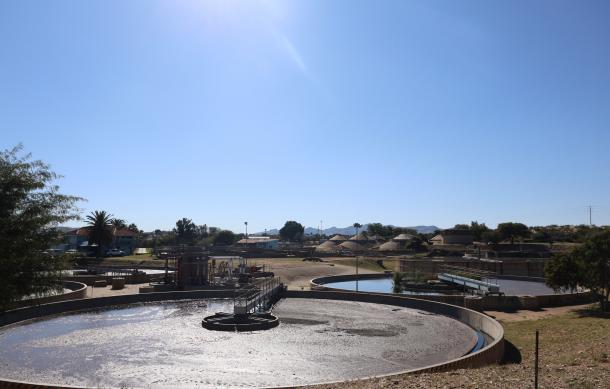
The City of Windhoek has reassured Windhoek residents that the water is safe for consumption and everyday use.
This was said by the CEO, Moses Matyayi, during a media tour at the Gammams Water Care Works facility.
He assured residents that the process used to produce potable drinking water is rigorous and scientifically tested.
Matyayi says the water returned into the system meets strict safety and quality standards before it is distributed for public use.
"We are currently standing at the Scientific Services, which is our laboratory. The laboratory is certified and also registered, and we use ISO standards in order to do all other processes in testing all related water bodies. As you may have seen from the first caption or from the first cells that we looked at at the primary source of water entry, we do a number of tests that actually tell us the various types of pollutants and faecal materials that are actually in the water or that come with the water from the household."
The tour highlighted the various stages involved in converting wastewater into clean water, including the separation of light and heavy materials and removal of organic matter and nutrients, as well as water purification processes.
Through these processes, the water is continuously monitored and tested at various points to ensure it meets international quality standards.
Process engineer at the Gammams Water Care Works Wastewater Treatment Plant, Justina Haihambo, said Windhoek is one of the few places that recycles wastewater for reuse.
However, she explained that through various treatment steps and processes, the water is purified to ensure it is safe, while also protecting both human health and the environment.
"So what happens is you have units or tanks, process units or tanks where, because it's quiet and undisturbed, it's given a certain duration of time or retention time for your solids to settle out. So the cleaner water goes through and out of the unit because whenever you have units that do the same job, more than one unit, the water first goes to what you call a 'distribution box' because you want to make sure that the energy of the water is equally distributed among all the units. So your first-ever distribution box is dividing the water equally among the units so you don't get an over- or under-treatment. So now then we separate; your light material will float, and then your heavier material will settle. So the heavier material settles – what you call sludge. Sludge is a byproduct of storage or treatment of wastewater. It's like a slurry when it's wet, and then it's removed, and that's what we use. We treat it anaerobically or without oxygen."
Haihambo also pointed to the place where the body of a Windhoek resident was recently discovered, which caused panic among some city residents about the safety of tap water.