


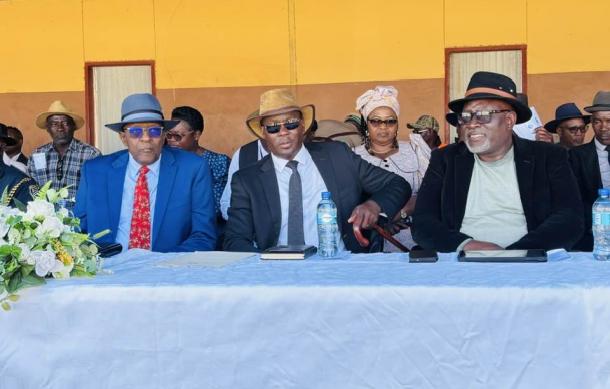
As Namibia observed the Genocide Remembrance Day through decentralised commemorations across the country, community members in Opuwo joined leaders in reflecting on the legacy of the 1904-1908 genocide against the Ovaherero and Nama people.
Speakers used the occasion to call for unity, healing and development, while encouraging Namibians to draw strength from the resilience of communities that survived the genocide and contributed to the country's liberation and independence.
Director General of the National Planning Commission (NPC), Dr Kaire Mbuende, encouraged Namibians to celebrate the resilience of the communities that survived the genocide and continued the struggle for freedom.
"Whenever our people talk about the genocide, they feel sorry for themselves; they say we are killed, yet we are alive. We say our nation died. But I would like to look at it from a different perspective. We are those that the Germans could not exterminate. The Germans killed us, but they could not exterminate us. The Germans could not succeed. They killed our fathers, but here we are still standing here. This means we should be proud whenever we remember our history."
Mbuende said the annual commemoration serves as a reminder of the sacrifices made by earlier generations and acknowledged those who championed the recognition of the genocide and the pursuit of restorative justice.
On the ongoing genocide negotiations, Mbuende noted that progress has been made, while emphasising the importance of continued engagement to address outstanding issues.
"Substantial progress has been made in the negotiation, but there are still some areas to be addressed… Outstanding issues are still to be ironed out. It is important to underscore, however, that negotiation is not a zero-sum game of all or nothing. There is no agreement that is perfect. It's not that you get everything or you get nothing."
Kunene Governor Vipuakuje Muharukua urged communities to unite and not to allow the divisions created by the genocide and displacement to continue, noting that it has the capacity to affect future generations.
"The genocide affected us all. We all suffered during the period of the genocide, either as Ovaherero or Nama people. In fact, it affected us all as Namibians. We need to learn from this experience and become torchbearers when our parents are no more."