


The annual report of the Zambezi Regional Council for the 2025/2026 financial year has been adopted by the National Council.
Tabling the report, MP Raymond Sezuni highlighted the significant contribution the region has made to the development of the country.
Zezuni said the potential of the region can only be fully realized if the existing infrastructure and the service delivery gaps are addressed.
“The report highlights critical challenges relating to roads and transport infrastructure, education, health services, water provision, housing, communication networks, economic development, and service delivery, particularly in communities that remain geographical, isolated, and vulnerable to flooding.”
Meanwhile, the ||/Karas Regional Council report indicated the region's progress in delivering important infrastructure and land service projects, but it still faces significant challenges such as poverty, unemployment, infrastructure backlogs, and institutional capacity constraints.
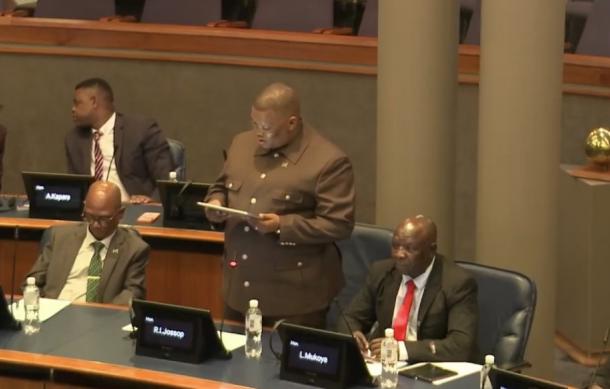
MP in the National Council Raymond Jossop expressed his concerns.
“Young people in particular are waiting for pathways in productive work. Families continue to struggle under pressure. Many communities will face the harsh reality of inadequate income, limited services, and fragile livelihoods.”
Jossop stated that project implementations are also often delayed due to weak administration and procurement bottlenecks.
“Several projects are being slowed down by delayed invoice processing, procurement bottlenecks and weak administrative responsiveness. A project planned for one financial year must not be carried over into the next without clear accountability.”
He further emphasised that elected leaders must confront the unfinished business of development, poverty, unemployment, underperformance and delayed implementation.
With the Kavango West Regional Council, the development of the two green schemes has been pointed out as a major milestone that contributes to food security.
National Council MP Joseph Sikongo explained.
“As we speak, if you travel from Marundo to Corranco or Anguena, you will see a sea of maize. Those heaps you see are not soil; they are maize. We are producing because our region is a food basket, and we are committed to maintaining that production.”
However, there are challenges in some areas.
“We only have one staff member who can speak the local vernacular languages, which makes it very difficult for elderly people to acquire documents because all the officials there speak only English. Unfortunately, not all of our elders speak English. Secondly, the region needs a magistrate. Currently, the magistrate commutes from Marundo to Cajenge. The Corranco Town Council has made land available, free of charge, to the Ministry of Justice. However, the land has remained idle thus far.”
Sikongo said budget constraints are also hindering development progress in the region.