


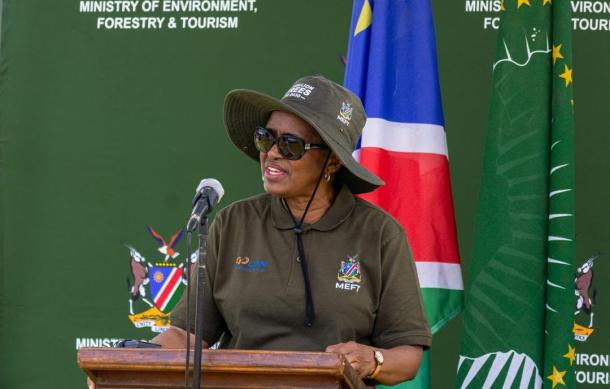
Minister of Evironment, Forestry and Tourism Indileni Daniel said the revised National Policy on Human-Wildlife Conflict Management promotes land-use planning and preventive measures to reduce conflict, supported by research, monitoring, community engagement, public awareness and the removal of problem-causing animals.
The minister was responding to IPC MP Rodrick Likando on the government ensuring that its policies on human-wildlife conflict are adaptive to the changing land use patterns and the impact of climate change.
"The Ministry of Environment Policy and Tourism will assist individuals, farmers, organisations and organs of state to take such measures, but it is not the sole responsibility to hold damage to property caused by the wild animals. The environmental inspectors and wildlife officers self-collaborate to ensure that activities and projects that require environmental assessments do not cause human-wide life conflict."
Namibia and Botswana, she said, also share wildlife data and coordinate surveys and joint patrols under the Kavango Zambezi Transfrontier Conservation Area.
The minister also responded to IPC MP Rodrick Likando regarding what measures have been implemented to prevent rhino poaching.
She stated that the ministry cannot reveal its strategies for security reasons; a potential poacher will have information that would assist them in carrying out their crimes.
She, however, gave an update on arrests made and how many carcasses have been discovered since 2014.
"Since 2014, a total of 131 rhino cactuses have been discovered across the Kunene and Erongo regions: 94 in Kunene and 37 in Erongo. During the same period, 33 rhino horns were recovered, as well, from poachers and traffickers. And 292 arrests related to rhino crimes were made across both regions. Notably, 19 suspects were arrested preemptively and intercepted while en route either to poach or before any animal could be harmed."