


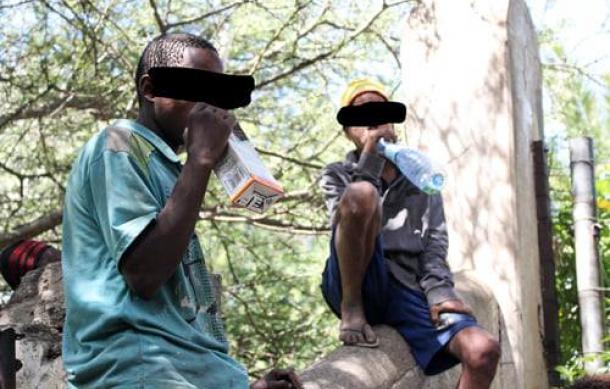
They move from one location to another in search of food and to collect anything of substance.
But while they rummage through dustbins and beg at traffic lights, someone, kilometers away, spends sleepless nights and these are the mothers of street children.
Tuarimbara Kasuto of the Namibian Broadcasting Corporation spoke with Elizabeth Hobexas, the mother of one of the street children who was swept away by a current during a flash flood in Windhoek in December.
Street children are found in every town across the country. Some are local, while others traveled there from other towns.
From the outside, one only sees a street child, but these are the children living from hand to mouth, not only for themselves but for their families as well.
Elizabeth Hobexas, a resident of Gobabis's Freedom Square Informal Settlement, is the mother of Sondag Boy Hobexab, one of the 10 street children who died during a flash flood in Windhoek last year.
Sondag Boy's troubles started at an early age, says Elizabeth. At the age of ten, he had already started absconding from school and running off to the streets, mainly to escape the hardships of home life.
"I don't also have a husband, and their father died a long time ago. So I struggle with food. When the children are all here, I take them to the bushes, where we look for bush beans and sell them, and we use that money to buy the little bit of food we eat. I don't have a job. When they go 'zula' here in town, people take away their stuff, and that is how they ended up in Windheok. We also didn't know—you think the child is here only to find out later when I start searching for the children, that they are in Windhoek. I always tell them when they leave that they must make sure they come back—until this happened to this child now. That is the problem we have."
The Ministry of Gender Equality has been advocating for the removal of children from the streets in vain. In the few cases where it succeeded, many have found their way back to the streets.
And as Hobexas relates, she too had attempted to get her child back in Gobabis a number of times, but without success.
"They don't listen, I would take them to the school, and I would go around looking for food for them, but they would run away. I will think the child is at school, but the child is, in the meantime, here in town. When I go back home, I find out the child was in town and not at school."
For years, Sondag Boy blended in with other street children. He would move between Windhoek and his home.
His single mother last saw him during the past winter, but Hobexas thought that Sondag Boy was still around Gobabis.
That was until the flash flood hit the capital city, Windhoek. Days later, what followed was the news of the death of her 24-year-old son, swept away by a current 211 kilometers away from home.
At the time, she did not know that her son was hustling in the city.
Sondag Boy is yet to be buried. The Ministry of Social Welfare pledged to provide a coffin, while the Ministry of Health and Social Services will assist in the transportation of the remains to Gobabis.
The Omaheke Regional Council also pledged to provide food and other basic necessities.