


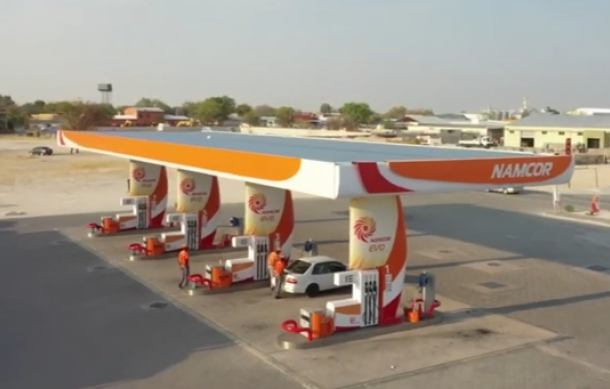
The National Petroleum Corporation of Namibia (NAMCOR) is currently facing a difficult financial and operational crisis, stemming from years of governance lapses, policy non-compliance, and systemic failures that have severely undermined the company's stability.
In a statement, NAMCOR acknowledged that despite a remarkable increase in revenue, from N$610 million in the 2017/18 financial year, doubling to N$7.4 billion in 2022/23, the company has struggled to translate this top-line growth into sustainable profit.
NAMCOR also posted its worst-ever loss of N$1.26 billion in the same year, largely driven by the underperforming NAMCOR Trading division.
This loss is attributed to both slim sales margins and uncontrolled trading costs.
NAMCOR Trading is the subsidiary involved in the distribution of petroleum and fuel products.
Compounding its problems in the market was the trading company's limited market share of just 7% and 8% compared to other oil majors. This marginal market position weakened its pricing power and competitiveness.
The detailed Namcor statement reads that, by March 2024, the total debt had spiralled to N$3.3 billion, prompting fears of a liquidity crisis and even potential liquidation.
A government bailout of N$1.2 billion in April 2024 helped the company pay down its most critical debts, slashing them to N$2.1 billion.
However, a large portion of this debt remains locked in a restrictive 24-month diesel supply agreement, which is set to expire in September 2025, and bears high interest rates.
NAMCOR has since reduced its debt further to N$1.6 billion, although N$800 million remains payable under the supply agreement, with another N$800 million owed to other creditors.
Over the past five years, several factors have eroded the company's financial position.
These include an unexplained oversupply of petroleum products and expensive credit facilities from suppliers, which have further diminished profit margins.
The granting of excessive credit facilities without proper procedures, alongside poor debt collection efforts and the alleged theft and loss of products, also contributed to its below-par performance.