


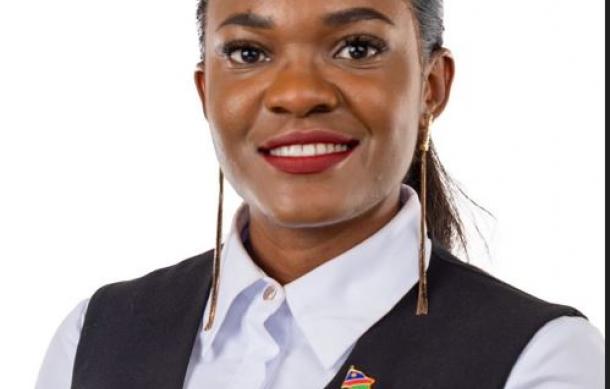
Affirmative Repositioning MP Ester Haikola is calling on the Ministry of Education, Innovation, Youth, Sport, Arts, and Culture to avoid rushed and inadequate training as it rolls out new educational campaigns.
Instead, she proposes allowing only qualified trainers to offer teacher support, ensuring a clear understanding and implementing school-based strategies to increase literacy rates.
Education is widely regarded as the key to overcoming poverty. However, Namibia has been experiencing challenges such as crowded classrooms, children staring blankly at letters they do not understand, and teenagers in the twelfth grade who still find it difficult to read a simple sentence.
This is the harsh reality that the country must confront as it prepares to launch the "End Learning Poverty for All in Africa" campaign, from 29 to 31 July, at Outjo, in the Kunene Region.
Ester Haikola, a former high school teacher with nearly a decade of classroom experience, paints a troubling picture, noting that learners are moved from Grade 8 all the way to Grade 12 without acquiring basic reading skills.
"It is very important, and after intensive training, opportunities should be set for teachers to meet regularly at cluster levels and also regional levels to discuss problems and areas they might be experiencing during implementation."
In 2022, she conducted a study on the revised biology curriculum in the |Khomas Region.
The study revealed what she now describes as one of the most ambitious but poorly supported education rollouts, hindered by rushed training and a lack of monitoring and evaluation.
Swapo Party MP Willem Amutenya added to the concern, saying it pained him to see how many children in government schools cannot read.
He said in most cases, the affected learners only begin their schooling at age six, missing the crucial early learning opportunities afforded to those who attend kindergartens and private schools.
While many seven-year-olds in public school still struggle with the alphabet in Grade 1, their peers in private schools are already reading, he said, thanks to their earlier exposure to educational content and stronger foundational support.
He called for kindergartens to become compulsory in public schools if the country truly means to end poverty.
Education Minister Sanet Steenkamp said the ministry, together with that of Gender Equality and Child Welfare, has a full review protocol to guide the way forward for Early Childhood Education.
She noted other useful learning tools used, including the Jolly Monitoring teachers' assistance app and a dashboard to track real-time data and impact.