


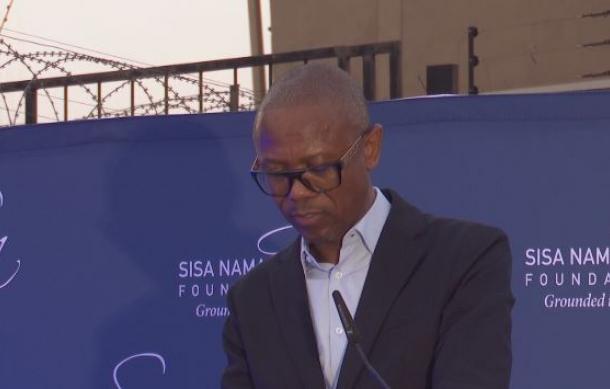
Senior lawyer Sisa Namandje said his dream to become a lawyer was met with numerous hurdles and setbacks.
Speaking at the launch of his seventh book, titled Legal Principles From Selected Case Law, Namandje reminisced about his path to becoming one of the country's top lawyers.
Namandje's name has become synonymous with the courtroom. He has defended many high-profile individuals, often in controversial matters.
The veteran legal practitioner, however, says his early days as a child were not cosy, but he was determined to obtain that law degree, which he did in the year 2000.
"As a well-performing learner, I could have dreamed big. If our society were normal then, I couldn't. I simply could not dream of bigger things, such as having the long hair I have now. It is true I passed with flying colours in my younger days, but in the sea of poverty at the time, I simply could not dream of bigger things other than learning to read, write, and be a little bit smarter than others."
Hambelela Namandje, Sisa's 10-year-old daughter, gleamed with pride when she spoke at her father's book launch.
"Tate took many months to write this book. I am happy that he is done writing this book. I am also glad he wants to share his knowledge with all of you. Tate's books are good for people who want to become lawyers or are studying law. I hope his books become well-known and popular. He inspires me because I want to write books when I am older, and I hope he inspires all of you. Thank you for listening to me."
Namandje's mentor is the well-known South African legal mind, advocate Vincent Maleka.
He stressed that his Namibian contemporary's book on selected case law is useful for emerging democracies.
"That must mean, amongst others, that courts and other adjudicatory forums are independent, both in form, perception, and substance, to render outcomes that are, in fact, free from political and commercial pressures when they fulfil their judicial and adjudicatory functions. And that also must mean that legal practitioners in those emerging democracies enjoy or must enjoy the widest amplitude of their freedom to represent their clients without fear, favour, or prejudice, but obviously subject to the observance of their ethical rules and conduct," he said.