


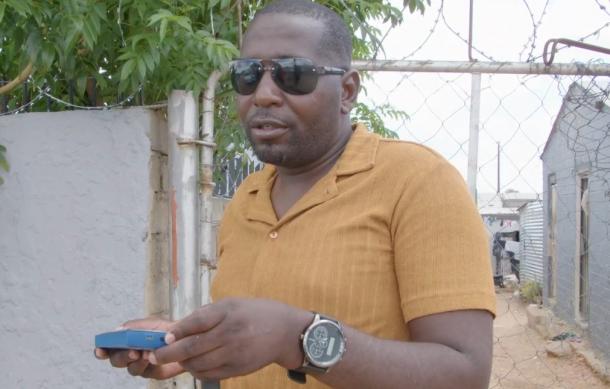
Johannes Tjitumba (35), a visually impaired student pursuing a degree in public management at the University of Namibia, hopes to use his lived experiences to advocate for systemic reforms that improve access to education and employment for visually impaired individuals.
Born with sight, Johannes Tjitumba lost his vision at age six due to measles.
The sudden change tested a young boy from Etunda, but it never dimmed his vision for a meaningful life.
Raised by determined parents who refused to let the situation define him, Tjitumba mastered braille at Eluwa Special School.
He excelled despite early hurdles, advancing to Windhoek Technical High School, the Polytechnic of Namibia and Limkokwing University of Creative Technology in Botswana, building fierce independence with each qualification.
Now 35, Tjitumba is redefining resilience, ambition and independence for visually impaired Namibians.
Though he once aimed for law, he's pursuing an Honours degree in Public Management at the University of Namibia, proving disability is no barrier to leadership or public service.
"I've learned so much in life to adapt to different situations, so for me, for as long as I engage with my lecturers and do what I'm expected to do, it's fine. It's going in the right direction."
While pursuing his studies, Tjitumba relies on a government disability grant and awaits approval for a dedicated disability study grant.
Although strides have been made for inclusive education at some institutions, he highlighted the limited access to Braille or accessible digital study materials, as well as the daily struggles visually impaired students face navigating university systems not designed with them in mind.
"The textbooks are a challenging part; issues we are really facing, no braille books. What do I do? I use the software and screen readers just to get some study materials, but it's not enough. As for me, I'm used to braille. It is not every time will I be comfortable for them to read for me; I prefer to read with my hands."
Tjitumba, who navigates solo with his white cane, dreams of public service leadership.
He, however, pointed out the harsh reality awaiting graduates with disabilities, and an employment market where stigma often overshadows ability is hard to ignore.
Tjitumba also believes independence should be supported, not tested, by society.
He is now using his voice to call for greater awareness, inclusive policies, and a shift in mindset, urging institutions to see persons with disabilities not as beneficiaries of charity but as contributors to national development.