


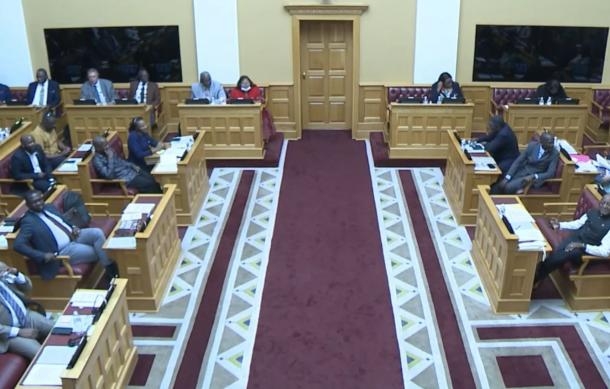
It was a back and forth in the National Assembly as MPs discussed the Petroleum Amendment Bill.
Most MPs from the opposition opposed the bill, citing the president's oversight over the unit as a sign of lack of confidence in the line ministry.
In their justification, MPs feel it is crucial for the unit to resort to the line ministry to account to Parliament on issues that may arise in the sector and answer questions that may be of interest to the public for transparency.
IPC MP Milunga Lizazi says, "If the ministry of mines lacks capacity, the logical step is to strengthen and capacitate the ministry."
"The Landless People's Movement, as a party to the august house, bears no resentment towards a resource-based economic development strategy. We are, however, not in agreement in the matter of amending the law to allow a sitting president to take charge of natural resources," adds LPM MP Eneas Emvula.
NUDU MP Vetaruhe Kandorozu contributes, "This move, or the method the president wants to introduce, has a potential for political interference. The move could create an unpredictable environment for investors, and it introduces the possibility of political interference in the sector."
"By housing the upstream petroleum unit in the office of the president, the bill bypasses traditional ministerial checks and balances as per article 31, ministerial accountability. Which does not cater to questioning the president and the director general, as they are not part of parliament," says IPC MP Nelson Kalangula.
Swapo Party MPs, however, argued that the president's oversight would streamline decision-making in a competitive market, reducing delays and ensuring that the country can capitalise on the resource.
They added that it would also align with broader national goals, enable sustainable development and ensure long-term prosperity, as well as regulate and optimise the country's oil reserves.
Modestus Ashipara is a Swapo Party MP.
"Centralising oversight under the office of the president is justified by the need for strategic decision-making in a volatile global energy landscape."
"It strengthens good governance, institutional coordination and sustainable management of Namibia's natural resources, " stressed Deputy Minister of Agriculture, Ruth Masake.