


African leaders are not relenting in their push for permanent representation on the United Nations Security Council, marking 20 years since the adoption of the Ezulwini Consensus and Sirte Declaration.
The two instruments set out Africa’s unified position on Security Council reform, demanding two permanent seats with veto power and five non-permanent seats for the continent.
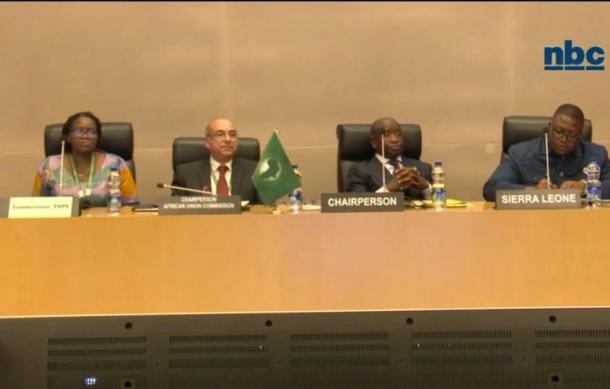
Meeting on the margins of the 39th Ordinary Summit of the African Union in Addis Ababa, the AU Committee of Ten, C-10, reaffirmed its call to end Africa’s historical exclusion from the world’s most powerful peace and security body.
C-10 Coordinator and President of Sierra Leone, Julius Maada Bio, presented a report outlining two decades of sustained advocacy and key milestones that have strengthened Africa’s negotiating position.
Namibia’s President, Netumbo Nandi-Ndaitwah, urged a sharper focus on concrete outcomes to advance the African Model of Reform in the ongoing UN intergovernmental negotiations.
The model firmly rejects temporary or intermediate arrangements, insisting on full and permanent representation as a matter of equity and justice.
Kenya’s President, William Ruto, said Africa’s continued exclusion is a grave injustice that must be corrected to make it fit for purpose, while Zambia’s President, Hakainde Hichilema, added that the Council’s current structure no longer reflects contemporary geopolitical realities, stressing that reform is now an urgent imperative rather than a distant aspiration.
UN Secretary-General António Guterres also described Africa’s exclusion as indefensible.
“This is 2026, not 1946. Whenever decisions about Africa are made around the table, Africa must be at the table,” Guterres told the AU summit on Saturday.