


Kavango West is one of the least connected regions in terms of network in the country.
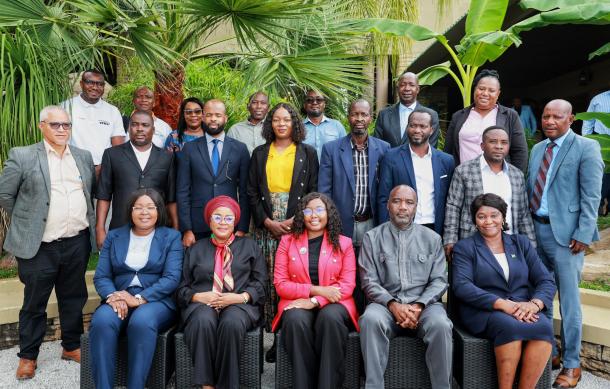
This was shared by the Minister of Information and Communication Technology, Emma Theofelus, during a stakeholder engagement at Simanya.
The event was aimed at taking stock of ICT-related challenges in the region and providing an update on key developments and interventions by the ministry.
Governor Verna Sinimbo stressed that the region is committed to inclusive growth, digital transformation, and people-centered development.
One of the plans, she said, includes the establishment of a rural ICT center in Ncamagoro Constituency.
“Through our State of the Region Address, the region continues to focus on, not limited to, expanding access to ICT services, especially in remote and underserved communities. Promoting digital skills development to enhance employability as well as strengthening partnerships with ministries, the private sector, and development partners. This is by leveraging technology to improve public service delivery and transparency and creating and enabling environment for innovation-led economic growth.”
Stakeholders also expressed that a lack of internet connectivity is affecting the quality of education and access to emergency services and has a negative impact on service delivery.
Therefore, the platform allowed for a collective reflection on the region's current status, clarifying where each stakeholder can assist by identifying practical areas for improvement and collaboration.
Theofelus also gave input on the new development.
“It is on this basis that under the Universal Service Fund, which is financially supported by the Namibian government. Kavango West Region has been prioritised, and under Phase One of the project under USF, is to expand network connectivity. So far, under that phase, we have been able to construct three towers. Two are at Kandumbu and Wiwi in the Mpungu Constituency and one at Naimanya in the Tondoro Constituency. These three network towers have been completed and are awaiting to be connected to the power grid or electricity or energy by NORED. Therefore, we urge NORED to help us expedite this process.”
Additionally, under phase two of this project, three sites are earmarked for the region, one in the Musese constituency and two in Mpungu.
Theofelus indicated that MICT is committed to working with the regional leadership to identify more unconnected communities for the betterment of the region.